 Pin to board
 There's something about a pot of beef and barley soup simmering on the stove that makes a kitchen feel like home. My neighbor once stopped by on a gray November afternoon, drawn in by the smell alone, and stayed for three bowls without saying much of anything. The barley absorbs all those savory beef flavors as it cooks, turning soft and yielding, while the vegetables break down into something almost sweet. This soup asks for patience but rewards it generously, filling your house with warmth before it even touches your lips.
I made this soup the first winter my daughter could sit at the counter and help peel carrots without destroying them. She'd hum while we chopped, asking why the barley looked like tiny pearls, and by the time it was done cooking, she'd forgotten she was supposed to be skeptical about vegetables. Now whenever I make it, I use her knife technique, and it's become our winter tradition without me ever formally deciding it would be.
Ingredients
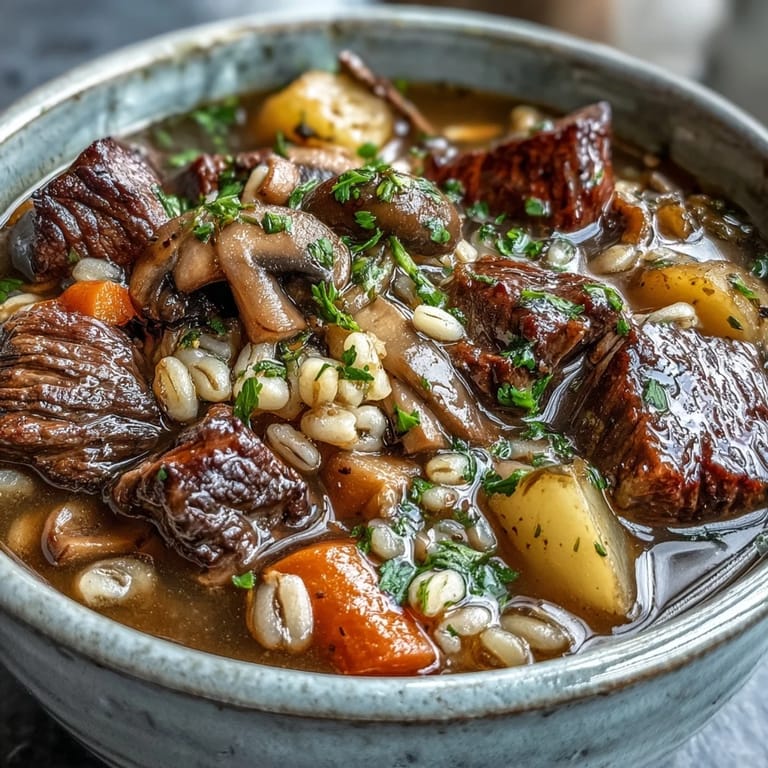
- Beef stew meat: Buy cubes that are relatively uniform in size so they cook evenly and stay tender instead of fraying into strings, and don't skip the browning step because that's where the soup gets its rich, deep color.
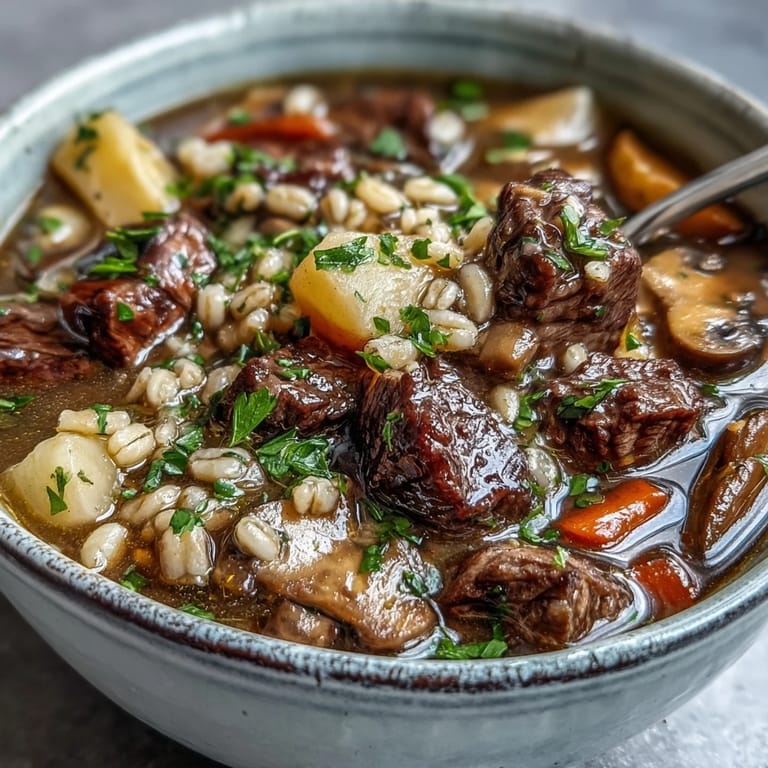
- Pearl barley: A quick rinse under cold water prevents it from turning the broth cloudy, and this grain is why the soup has such satisfying substance without being heavy.
- Carrots: Dice them smaller than you think you need to because they soften more than you'd expect and distribute their sweetness throughout the whole pot.
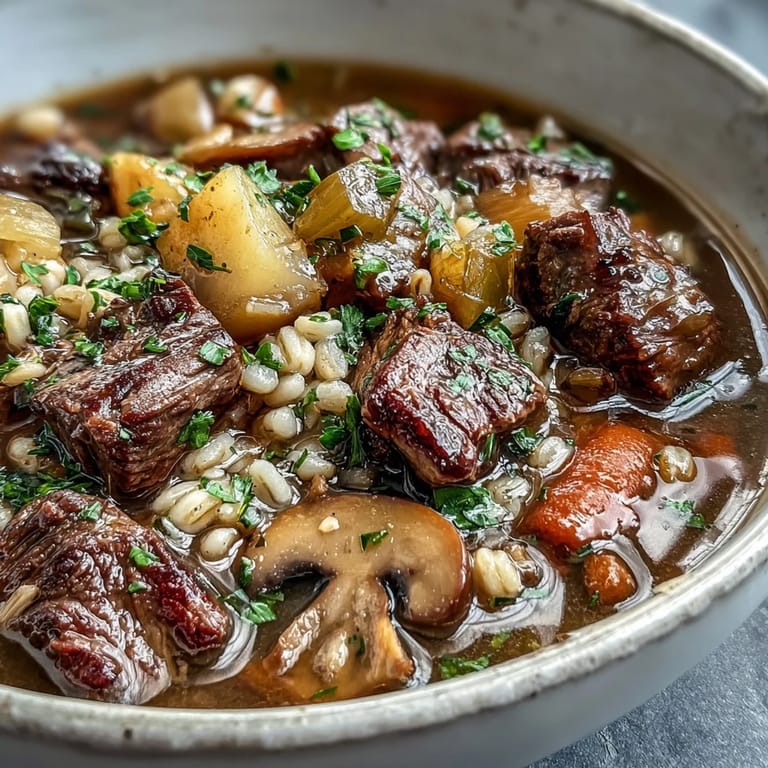
- Celery and onion: These are the flavor foundation, so don't rush the sauté or skip it entirely because they build the base everything else depends on.
- Potatoes: Waxy varieties hold their shape better than starchy ones, which matters more than you'd think when you're scooping into a hot bowl.
- Mushrooms: They add an earthy depth that makes the soup feel more complex, and slicing them thinly means they practically melt into the broth.
- Frozen peas: Save them for the end so they stay bright and pop slightly on your tongue instead of turning mushy and gray.
- Beef broth: Use good quality broth because it's literally half of what you're eating, and the difference between mediocre and rich is noticeable in every spoonful.
- Bay leaves and herbs: The thyme and parsley work quietly in the background, and the bay leaves are essential but must be removed before serving or you'll have an unpleasant surprise.
- Olive oil: This helps the beef brown properly instead of steaming, which is a small distinction that matters tremendously for flavor.
Tired of Takeout? 🥡
Get 10 meals you can make faster than delivery arrives. Seriously.
One email. No spam. Unsubscribe anytime.
Instructions
- Brown the beef first:
- Heat oil until it shimmers, then add beef in a single layer and let it sit for a minute before stirring, listening for that satisfying sizzle that tells you the crust is forming. Work in batches if your pot is crowded because cramped beef steams instead of browning.
- Build the base:
- Once the beef is out, add onions, carrots, celery, and mushrooms to the same pot without washing it, and let them soften until the onions turn translucent and the mushrooms release their moisture. You want to hear them sizzling gently, not violently.
- Wake up the garlic:
- Add minced garlic and stir constantly for about a minute until your kitchen suddenly smells alive and sharp. This is the moment everything changes from raw vegetables to the beginning of something delicious.
- Combine everything:
- Return the beef, add potatoes, barley, tomatoes if you're using them, and all the broth with bay leaves and dried herbs. Stir well so the barley doesn't sink and stick to the bottom.
- Simmer low and slow:
- Bring it to a boil so you know it's gotten hot all the way through, then immediately turn heat down low, cover it, and let it bubble gently for an hour. This is when the beef becomes tender and the barley starts drinking in flavor.
- Finish with peas:
- After an hour, stir in the frozen peas and simmer uncovered for another 20 to 30 minutes until everything is completely tender and the barley has absorbed most of the liquid. Season with salt and pepper to your taste.
- Remove the bay leaves before serving:
- Fish them out carefully so nobody accidentally bites one, and give the soup one final taste to see if it needs more seasoning.
 Pin to board
 My mother served this soup to my father the day he came home from the hospital, and he ate three bowls without complaining about his diet restrictions. It turned out to be the first thing his body accepted without argument, and somehow that made the recipe feel sacred in a quiet way. Ever since then, I've understood that good food isn't really about technique or ingredients, it's about showing up for people in their ordinary and difficult moments.
Why Barley Makes All the Difference
Barley is what separates this soup from dozens of others that look similar in a bowl. Most people reach for rice or noodles out of habit, but barley has this toothy, almost nutty texture that becomes more pronounced the longer it cooks, and it never turns mushy no matter how long the pot bubbles. The first time I substituted it with regular rice because I was in a hurry, my family asked why it tasted wrong, and that's when I learned that some ingredients are essential not just for nutrition but for identity.
The Magic of Leftovers
This soup is one of those rare dishes that genuinely improves after a night in the refrigerator, as the flavors deepen and the broth becomes richer from the beef and vegetables settling. I've learned to make double batches just for the leftover privilege, and my freezer usually has at least one container waiting for a day when cooking feels impossible. Reheating it on the stove instead of the microwave makes a surprising difference, bringing the flavors back to life rather than making them taste tired.
Variations and Personal Touches
The beauty of this soup is that it accepts additions and substitutions without losing its essential character. I've added parsnips and turnips on autumn afternoons when I wanted something more root-vegetable forward, and I've thrown in diced tomatoes when I had cans waiting to be used. Some people use turkey or chicken for a lighter version, and while it's technically a different dish, it's still delicious and sometimes that's what you need depending on the season or the people you're feeding.
- Try a splash of red wine or Worcestershire sauce if you want to deepen the savory notes even further.
- Fresh herbs stirred in at the very end brighten everything up if the soup feels too heavy on your palate.
- Adding extra vegetables like green beans or zucchini works perfectly if you're improvising based on what's in your crisper drawer.
 Pin to board
 This soup has fed my family through quiet winter Sundays, unexpected guests, and moments when we needed reminder that warmth can come from something as simple as a pot and time. Make it whenever you want to feel a little less lonely.
Recipe Questions & Answers
- → Can I use a different grain instead of pearl barley?
Yes, you can substitute with farro, brown rice, or wild rice. Adjust cooking time as needed since these grains may cook faster or slower than barley.
- → How do I make this soup in a slow cooker?
Brown the beef and sauté the vegetables first, then transfer everything to a slow cooker. Cook on low for 6-8 hours or high for 3-4 hours until beef and barley are tender.
- → Can I use a different cut of beef?
Chuck roast, short ribs, or even ground beef work well. Chuck roast should be cut into cubes, while ground beef can be browned and crumbled directly into the pot.
- → Why is my barley still hard after cooking?
Pearl barley typically needs 45-60 minutes to become tender. If it's still hard, continue simmering with additional broth if needed. Old barley may take longer to soften.
- → How can I thicken the soup if it's too thin?
Simmer uncovered for an additional 15-20 minutes to reduce the liquid. Alternatively, mash some of the potatoes against the pot side or add a cornstarch slurry.
- → Can I prepare this soup ahead of time?
Absolutely. This soup tastes even better the next day as flavors meld. Store in the refrigerator for up to 4 days or freeze in portions for up to 3 months.