 Pin to board
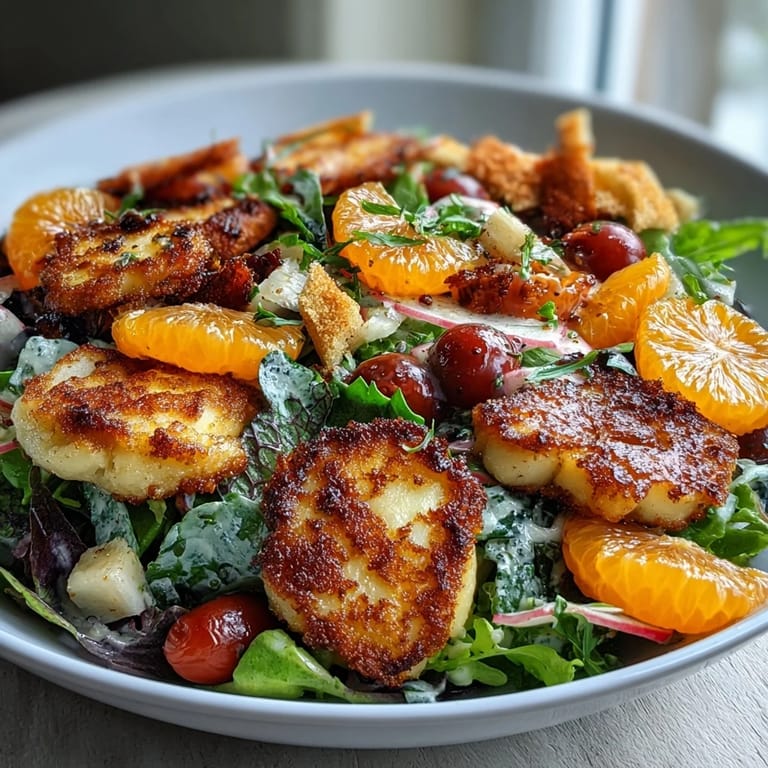
 There's something about the moment halloumi hits a hot pan that never gets old—that immediate sizzle and the way it softens without melting into nothing. I discovered this salad during a sun-drenched afternoon in a small Mediterranean kitchen, watching someone casually combine warm cheese with bright citrus and crispy bread as if it were the most natural thing in the world. The blood oranges caught the light, the fresh herbs smelled alive, and I realized right then that this wasn't just a salad; it was an entire feeling on a plate.
I made this for friends one evening when someone unexpectedly brought blood oranges to my door, and I had that moment of culinary panic where you're not quite sure what to do with an ingredient but you trust your instincts anyway. By the time we sat down to eat, those oranges had transformed into something magical, the cheese was still warm enough to have a slight wobble, and everyone went quiet for just a second before diving in—the kind of quiet that means you've done something right.
Ingredients
- Halloumi cheese, sliced into 1 cm thick pieces (200 g): The star that doesn't disappear when you cook it; this squeaky Cypriot cheese holds its shape beautifully and develops a golden crust that you'll find yourself eating straight from the pan when no one's looking.
- Blood oranges, peeled and segmented (2): Their deep crimson flesh brings both visual drama and a tartness that regular oranges can't quite match, but if they're not in season, regular oranges work just fine with a squeeze of lemon to compensate.
- Mixed salad greens (150 g): Use what you love—romaine gives you crunch, arugula brings a peppery bite, and fresh parsley and mint add those herbaceous notes that make you taste spring no matter the season.
- Cucumber, diced (1 small): Cooling and watery, it balances the richness of the cheese and the acidity of the dressing.
- Cherry tomatoes, halved (8): Choose ones that are actually flavorful; pale, mealy tomatoes will let down an otherwise beautiful salad.
- Red onion, thinly sliced (½ small): The sharpness mellows slightly as it sits, and the thin slices let it distribute evenly rather than overwhelming any single bite.
- Radishes, thinly sliced (2): They maintain a crisp, peppery snap that prevents the whole salad from feeling soft or heavy.
- Sourdough bread, cut into cubes (2 thick slices): Sourdough's slight tang pairs beautifully with the sumac dressing, and its sturdy crumb holds up to toasting without turning to dust.
- Olive oil for croutons (2 tbsp): A good quality oil here makes a noticeable difference in how the croutons taste.
- Extra virgin olive oil for dressing (3 tbsp): Don't skimp on this; it's the foundation that carries every other flavor.
- Fresh lemon juice (1½ tbsp): Always fresh, never from a bottle—bottled juice tastes flat and one-dimensional.
- Pomegranate molasses (1 tbsp): This ingredient is what transforms the dressing from ordinary to distinctive; it adds depth and complexity that you can't easily replicate, though lime juice works in a pinch.
- Sumac (1 tsp): Its lemony, slightly floral quality is the signature note of this entire dish; it's worth seeking out in specialty shops or online.
- Ground black pepper and sea salt (¼ tsp each): These are the final adjustments that bring everything into focus.
Tired of Takeout? 🥡
Get 10 meals you can make faster than delivery arrives. Seriously.
One email. No spam. Unsubscribe anytime.
Instructions
- Toast the sourdough until it's golden and shattered:
- Preheat your oven to 200°C (400°F), toss your sourdough cubes in olive oil and sea salt, then spread them on a baking tray and let them bake for 8–10 minutes until the edges turn golden and they've begun to crisp. They'll continue to harden as they cool, so don't leave them until they look dark brown or they'll taste bitter.
- Fry the halloumi until it forms a crust:
- Heat your non-stick skillet over medium heat and let it get properly hot before you add the cheese; you'll know it's ready when a drop of water beads up and dances across the surface. Fry each slice for 2–3 minutes per side until the surface turns golden and slightly translucent at the edges, then transfer to a paper towel to drain briefly—this removes excess oil without cooling the cheese too much.
- Build your salad foundation:
- Combine your salad greens, cucumber, cherry tomatoes, red onion, radishes, and blood orange segments in a large bowl; this is where color coordination matters because you're eating with your eyes first. The variety of textures here is what makes each bite interesting.
- Whisk the dressing with care:
- In a separate bowl, whisk together your olive oil, lemon juice, pomegranate molasses, sumac, pepper, and salt until everything is emulsified and the flavors have started to marry. If the dressing looks separated, that's fine—a few whisks just before serving will bring it together again.
- Bring it all together:
- Add the warm halloumi and crispy croutons to your salad bowl, drizzle generously with dressing, and toss gently so nothing gets bruised. The warmth of the cheese will slightly wilt the most delicate greens, which actually improves the texture of the whole thing.
- Serve immediately:
- The magic of this salad is the temperature contrast, so get it to the table while the halloumi is still warm and the croutons still have their crunch. Once it sits for more than a few minutes, you lose that essential interplay.
 Pin to board
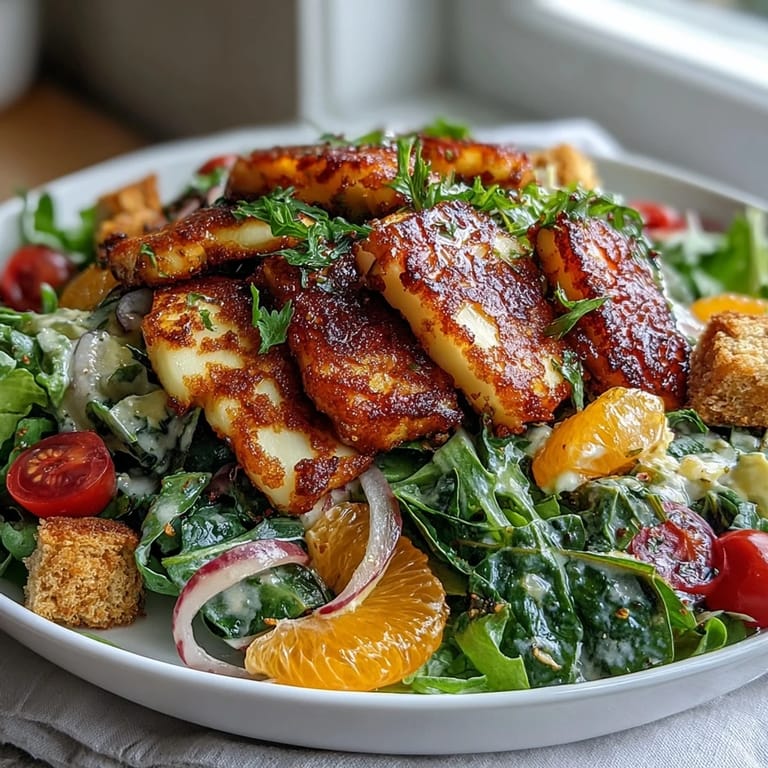
 The first time someone told me this salad was vegetarian, I felt a little silly for not realizing it, because the halloumi is so substantial and satisfying that it completely stands in for any protein without apology. It's become one of those dishes I make when I want to impress without stress, when I want the table to feel special but I don't want to spend hours cooking.
Why Blood Oranges Matter Here
Regular oranges would work, absolutely, but blood oranges bring a deeper, almost wine-like quality that complements the savory halloumi in a way that feels intentional. If you can't find them, pink grapefruit gives you that tartness and visual drama, though you'll want to cut the pieces smaller since grapefruit can be more assertive. The brightness of citrus is what keeps this salad from feeling heavy, so don't skip the fruit component even if you have to adjust the variety.
The Dressing Makes Everything
This isn't a simple vinaigrette; it's a Middle Eastern-inspired dressing that relies on the interplay between acid (lemon and pomegranate molasses) and the perfumy quality of sumac. If you taste it on its own before tossing, it might seem sharp or even unbalanced, but once it coats the salad and mingles with the warm cheese and fresh vegetables, it becomes something that tastes exactly right. The pomegranate molasses in particular does something magical—it adds umami depth and a subtle sweetness that makes you want another bite.
Storage and Serving Wisdom
This salad is meant to be assembled just before eating, unlike some composed salads that benefit from sitting together for a while. If you're making it for a crowd, you can prep all your components in advance and assemble them at the last minute, which takes the pressure off and keeps everything at its best. If you have leftovers, store the dressed portion and the undressed components separately so you can rebuild it with a bit of fresh dressing the next day.
- Toast your nuts ahead of time if you want to add pistachios or walnuts, as they'll stay crunchier than if you add them hours before serving.
- The croutons and halloumi are best eaten warm or at room temperature, never cold from the refrigerator.
- A crisp white wine like Sauvignon Blanc truly does complete the experience, but so does sparkling water with fresh mint if you're keeping it simple.
 Pin to board
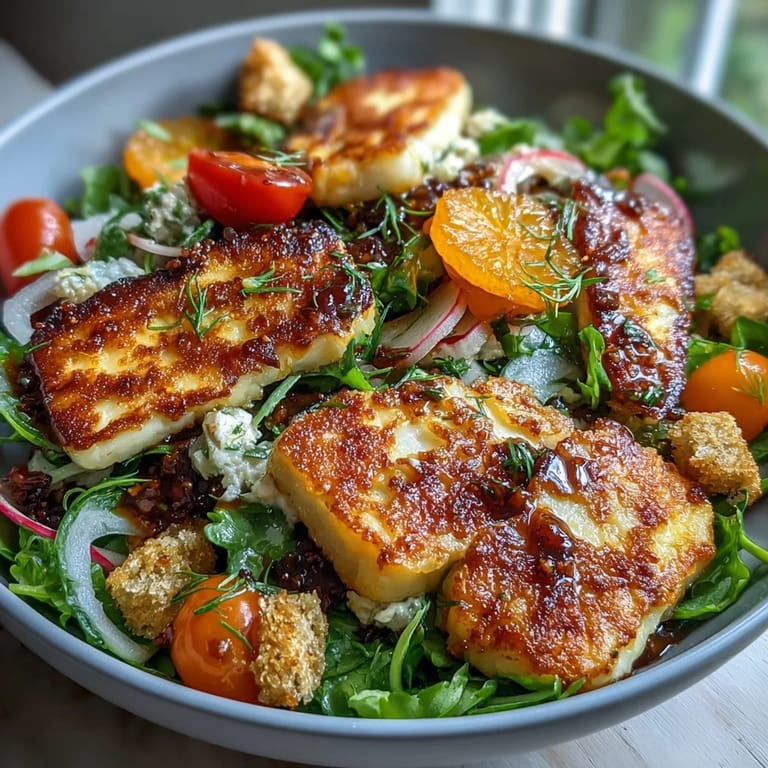
 This salad has become my answer to the question of what to cook when someone says they want something light but satisfying, something that tastes both modern and somehow timeless. It's the kind of dish that makes you feel like you've traveled somewhere just by eating it.
Recipe Questions & Answers
- → Can I use regular oranges instead of blood oranges?
Yes, you can substitute blood oranges with navel oranges or even pink grapefruit. The flavor profile will be slightly different—blood oranges have a distinct raspberry-like note—but the dish will still be delicious and visually appealing.
- → How do I prevent halloumi from becoming too salty?
If you're sensitive to salt, briefly rinse the halloumi under cold water and pat dry before cooking. You can also reduce the salt in the dressing accordingly. The natural saltiness of the cheese is one of its defining characteristics, so a light rinse helps without removing all flavor.
- → Can I make the croutons ahead of time?
Absolutely! Bake the sourdough croutons up to 2 days in advance and store in an airtight container at room temperature. They'll stay perfectly crispy and ready to toss into your salad when needed.
- → What can I use instead of pomegranate molasses?
You can substitute pomegranate molasses with equal parts balsamic vinegar and a touch of honey or maple syrup. Alternatively, reduce pomegranate juice with a bit of sugar until syrupy. The result will have similar tangy depth.
- → Is this salad suitable for meal prep?
The salad is best enjoyed fresh, especially since warm halloumi is key to the experience. However, you can prep components in advance: chop vegetables, make the dressing, and bake croutons up to 2 days ahead. Fry the halloumi just before serving and toss everything together.
- → Can I make this gluten-free?
Yes! Simply replace the sourdough bread with your favorite gluten-free bread for croutons, or omit them entirely and add extra vegetables or nuts like toasted pistachios or walnuts for crunch instead.