 Pin to board
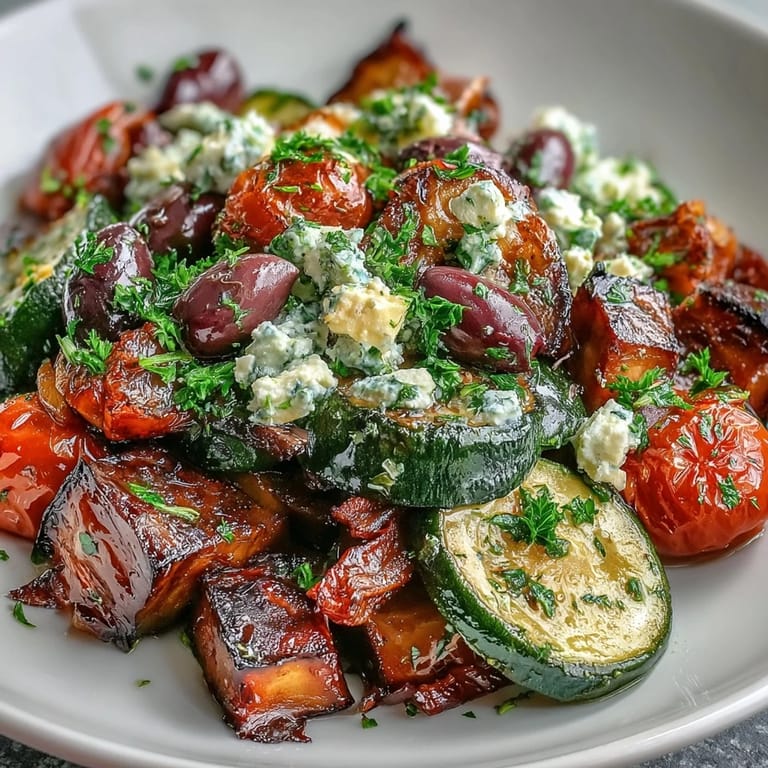
 There's something magical about taking a classic Greek salad and warming it up in the oven. I discovered this version on a crisp autumn evening when I had a surplus of vegetables and wanted something that felt both familiar and unexpectedly different. The moment those bell peppers and eggplant hit the hot baking sheet, the kitchen filled with this toasty, caramelized aroma that made everyone pause and ask what I was making. It's become my go-to when I want something that tastes like summer but feels cozy enough for cooler months.
I made this for a potluck last spring, and what started as a quiet contribution became the dish people actually went back for seconds on. One friend told me it was the first time she'd enjoyed roasted eggplant, which somehow meant more to me than any compliment about the feta. That's when I realized this salad bridges something special—it respects tradition but doesn't apologize for trying something new.
Ingredients
- Red and yellow bell peppers: These sweetened beautifully when roasted, so don't skip the color variety—it matters for flavor as much as it does visually.
- Red onion: Cut into wedges rather than thin slices so they stay intact and develop those caramelized edges.
- Zucchini: Half-inch rounds prevent them from collapsing into the other vegetables, which I learned the hard way.
- Eggplant: One-inch cubes are crucial; smaller pieces dry out, larger ones don't cook through evenly.
- Cherry tomatoes: Halved rather than whole so they release their juices and get slightly concentrated.
- Extra-virgin olive oil: Use the good stuff for both roasting and the dressing—it's what makes this taste like Greece.
- Kalamata olives: Always pit them yourself if you can; pre-pitted ones sometimes taste metallic.
- Feta cheese: The tanginess cuts through the sweetness of roasted vegetables in the best possible way.
- Fresh flat-leaf parsley: Don't use dried here; it becomes almost invisible and loses all its brightness.
- Red wine vinegar and lemon juice: Together they create a dressing with real complexity that keeps this from tasting one-dimensional.
- Dried oregano: A full teaspoon might seem like a lot, but oregano is what ties this to Greece.
- Dijon mustard: This tiny amount acts as an emulsifier and adds a subtle sophistication you won't quite taste but will definitely notice.
Tired of Takeout? 🥡
Get 10 meals you can make faster than delivery arrives. Seriously.
One email. No spam. Unsubscribe anytime.
Instructions
- Get your oven ready and prep the vegetables:
- Preheat to 220°C (425°F) and line your baking sheet with parchment paper—this saves cleanup and prevents sticking. Cut everything into roughly the same size so nothing cooks faster than something else, then spread it all out in one layer.
- Dress the vegetables for roasting:
- Drizzle with 2 tablespoons of olive oil, scatter salt and pepper over everything, and toss with your hands until each piece is lightly coated. This is the moment where the vegetables look humble, but you know they're about to transform.
- Roast until golden and tender:
- Put the sheet in the oven for 25 to 30 minutes, stirring everything halfway through so the bottom pieces don't scorch. You'll know it's done when the edges are caramelized and the vegetables yield when you press them gently.
- Make the dressing while vegetables roast:
- In a small bowl, whisk together the olive oil, red wine vinegar, lemon juice, oregano, Dijon mustard, and grated garlic until everything comes together into something glossy and emulsified. Taste it and adjust salt and pepper—it should make your mouth water.
- Layer your salad thoughtfully:
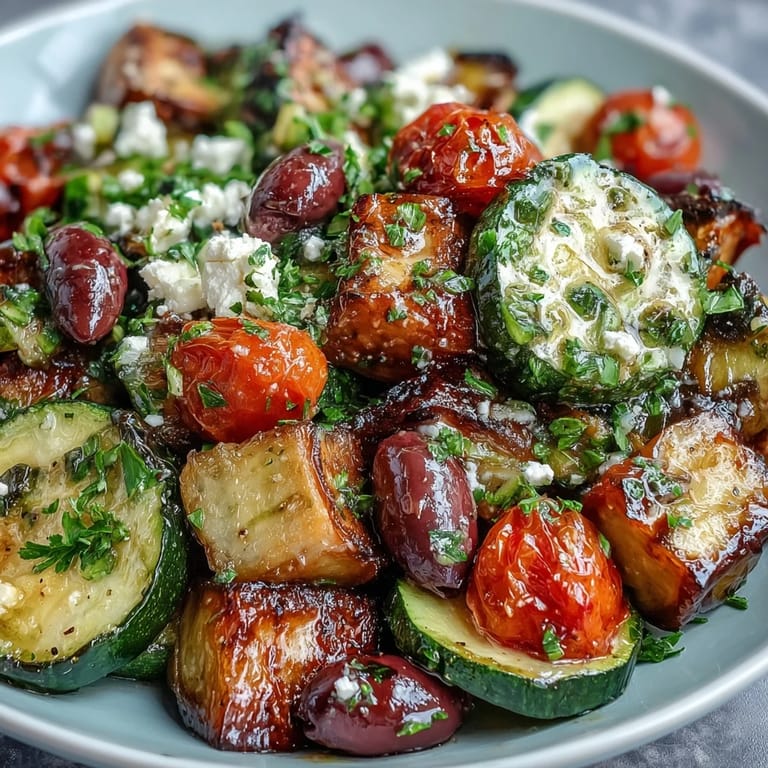
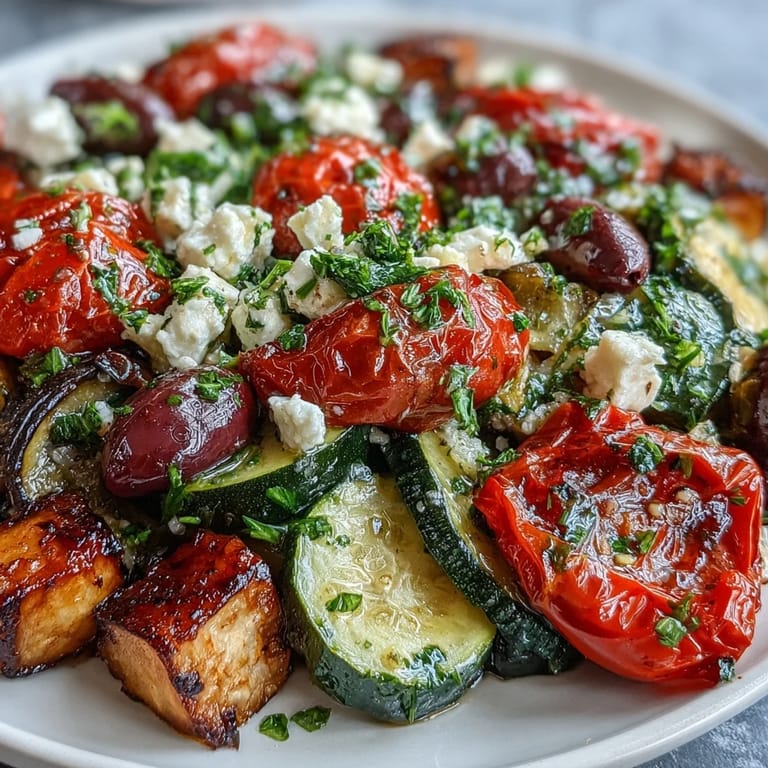
- Arrange cucumber slices on a large platter or bowl as your base, then pile the warm roasted vegetables on top. Scatter the olives and crumbled feta over everything, then drizzle with dressing so it soaks into the warm vegetables.
- Finish and serve:
- Sprinkle chopped parsley over the top and toss everything together gently so you don't crush the feta. Serve it while the roasted vegetables still have some warmth, or let it come to room temperature—both ways are perfect.
 Pin to board
 This salad has quietly become the thing I make when I want to feel like I'm cooking from somewhere else without actually going anywhere. There's something about serving food that's warm but not hot, familiar but surprising, that brings people together in a way restaurant food sometimes doesn't.
Why Roasting Changes Everything
Raw vegetables are fresh, sure, but they're also a little predictable. When you roast them at high heat, the natural sugars caramelize and concentrate, and suddenly a humble zucchini becomes something with actual depth. The eggplant loses its bitterness and becomes silky, the peppers turn almost candy-sweet, and the onions go from sharp to mellow. This is why Greek restaurants in Greece make salads like this—they understand that heat does things cold water never could.
Temperature and Timing Matter
I've tried making this at lower temperatures because I thought it would be safer, but the vegetables just got soft without browning, and the whole thing tasted steamed. The 220°C oven is hot enough to create that caramelized exterior while keeping the insides tender, and the 25 to 30 minutes is precise enough that you're not sitting around waiting. Set a timer so you remember to stir halfway through—the vegetables on the bottom need to rotate up so everything browns evenly.
How to Make It Your Own
The beauty of this salad is that it's flexible without losing its identity. I've added roasted potatoes when I wanted something more substantial, swapped mushrooms for eggplant when someone didn't eat it, and once threw in some capers because they were sitting on my shelf. The dressing stays the same, the roasting method stays the same, but suddenly it feels like your own recipe instead of something you copied.
- Sun-dried tomatoes or capers add a briny intensity that cuts beautifully through the creamy feta.
- Roasted chickpeas make it more filling if you want it to be a main course instead of a side.
- A handful of fresh mint instead of parsley transforms it into something closer to a Mediterranean grain bowl energy.
 Pin to board
 This salad proved to me that you don't need complicated technique or hard-to-find ingredients to cook something that feels special. It's become the recipe I make when I want to remember why I love cooking in the first place.
Recipe Questions & Answers
- → Can I serve this dish cold?
Yes, while it's delicious warm, you can serve it at room temperature or chilled. The flavors actually develop more depth after sitting for a few hours.
- → What vegetables work best for roasting?
Bell peppers, zucchini, eggplant, and red onion roast beautifully. Cherry tomatoes become sweet and concentrated. Feel free to add mushrooms or swap vegetables based on what's in season.
- → How long will leftovers keep?
Store in an airtight container in the refrigerator for up to 3 days. The vegetables will soften more over time, but the flavors will continue to meld together deliciously.
- → Can I make this ahead?
You can roast the vegetables up to a day in advance and store them separately. Assemble with fresh cucumber, olives, feta, and dressing just before serving for the best texture.
- → What can I substitute for feta?
Try halloumi for a squeaky texture, goat cheese for creaminess, or a vegan feta alternative. For a dairy-free version, extra olives and capers can provide that salty element.
- → Is this suitable for meal prep?
Absolutely. Portion into individual containers, keeping the dressing separate if you prefer crisp vegetables. It reheats well or can be eaten cold straight from the fridge.