 Pin to board
 There's something almost meditative about standing over a pot of onions for forty minutes, watching them transform from sharp and pale to a deep amber that smells like caramel and savory patience. I learned to make French onion soup on a cold November evening when a friend showed up unannounced with a bottle of wine and stories about her semester abroad in Lyon. We had nothing in the kitchen but time and curiosity, so we started slicing onions and talking until the whole apartment filled with that unmistakable aroma that somehow says comfort in any language.
Years later, I made this for my partner after they'd had a genuinely terrible week at work, and I remember the exact moment they tasted it and their shoulders just dropped, tension melting away with every spoonful. That's when I realized this soup wasn't really about technique or ingredients, but about the act of slow cooking something for someone as an apology to the world on their behalf.
Ingredients
- Yellow onions: Three large ones, thinly sliced, are the absolute foundation here, and honestly, don't skimp on size or count, because they shrink down dramatically and you need that volume to create the deep caramel base.
- Unsalted butter and olive oil: The butter brings richness while the olive oil prevents burning, and this combination creates a better caramelization than either one alone.
- Garlic: Just two minced cloves add a whisper of sharpness that prevents the soup from feeling one-dimensional once the onions turn sweet.
- Sugar and salt: A teaspoon of sugar isn't about making this dessert, it's about encouraging the onions to release their natural moisture early in the cooking process and accelerate caramelization.
- All-purpose flour: Two tablespoons create a subtle thickening agent that gives the broth body without making it heavy or pasty.
- Dry white wine: Half a cup of something you'd actually drink cuts through the richness with acidity and adds a complexity that feels sophisticated without being pretentious.
- Beef or vegetable stock: Five cups of quality stock are non-negotiable, because this is really just a vehicle for letting good stock shine in the simplest way possible.
- Fresh thyme and bay leaf: These herbs simmer gently to add earthiness without overtaking the caramelized onion flavor that should stay front and center.
- French baguette: Four slices about an inch thick serve as edible boats for soaking up broth and providing textural contrast to the soft onions.
- Gruyère cheese: A cup of grated Gruyère melts into golden strings that create those Instagram-worthy pull shots, but more importantly, the nutty flavor complements caramelized onions in a way that feels inevitable once you taste it.
Tired of Takeout? 🥡
Get 10 meals you can make faster than delivery arrives. Seriously.
One email. No spam. Unsubscribe anytime.
Instructions
- Heat your fat and start the onion journey:
- In a large pot or Dutch oven, melt the butter with olive oil over medium heat, then add your sliced onions and stir them around until they're coated in that golden warmth. This is your moment to slow down, because rushing this step is the only real way to mess up this entire recipe.
- Coax out the caramel color:
- Stir the onions frequently over the next 35 to 40 minutes as they soften, collapse, and gradually turn the color of honey, then amber, then old mahogany. About halfway through, sprinkle in the sugar and salt, which act like little helpers encouraging the onions to release moisture and brown more effectively.
- Wake up the garlic:
- When the onions look like they've given everything they have, add your minced garlic and cook just long enough to smell that sharp, pungent aroma, maybe a minute. This timing is crucial because burnt garlic tastes bitter, but undercooked garlic tastes raw and harsh.
- Create a thickening agent:
- Sprinkle the flour over the onions and stir constantly for two minutes, coating everything evenly and cooking out the raw flour taste. What you're making here is called a roux, and it's the foundation that will give the broth its silky mouthfeel.
- Deglaze with wine:
- Pour in the white wine while scraping the bottom of the pot with a wooden spoon, releasing all those browned, flavorful bits stuck to the surface. The wine will sizzle and steam, smelling like a French bistro, and you'll watch it reduce slightly as the alcohol cooks off.
- Build the broth:
- Add your stock, then tuck in the thyme sprigs and bay leaf, and bring everything to a gentle simmer over medium heat. Let it bubble quietly for 20 to 25 minutes while you prep the bread, because this resting time allows all the flavors to meld into something greater than their individual parts.
- Toast your bread foundations:
- While the soup simmers, preheat your broiler and arrange baguette slices on a baking sheet, then brush both sides with olive oil and slide them under the broiler for about a minute per side until they're golden and slightly crispy. Watch them closely because the line between perfectly toasted and burnt is faster than you'd expect.
- Assemble and top with cheese:
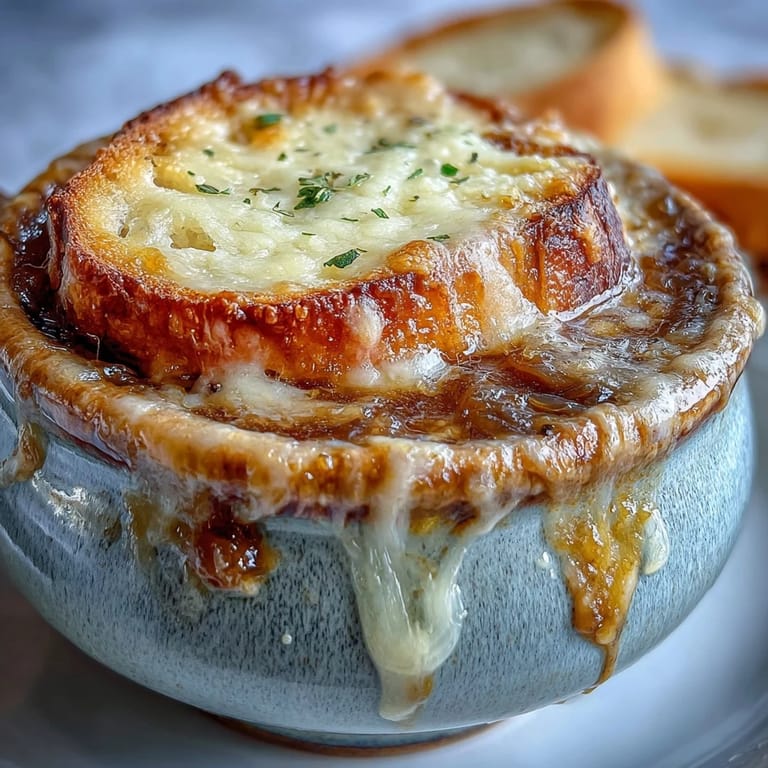
- Ladle the hot soup into oven-safe bowls, top each with a toasted baguette slice, then heap the grated Gruyère generously on top, covering the bread almost completely. Don't be shy here, because the cheese is going to create that signature bubbly golden crust that makes this dish worth all the effort.
- The final broil:
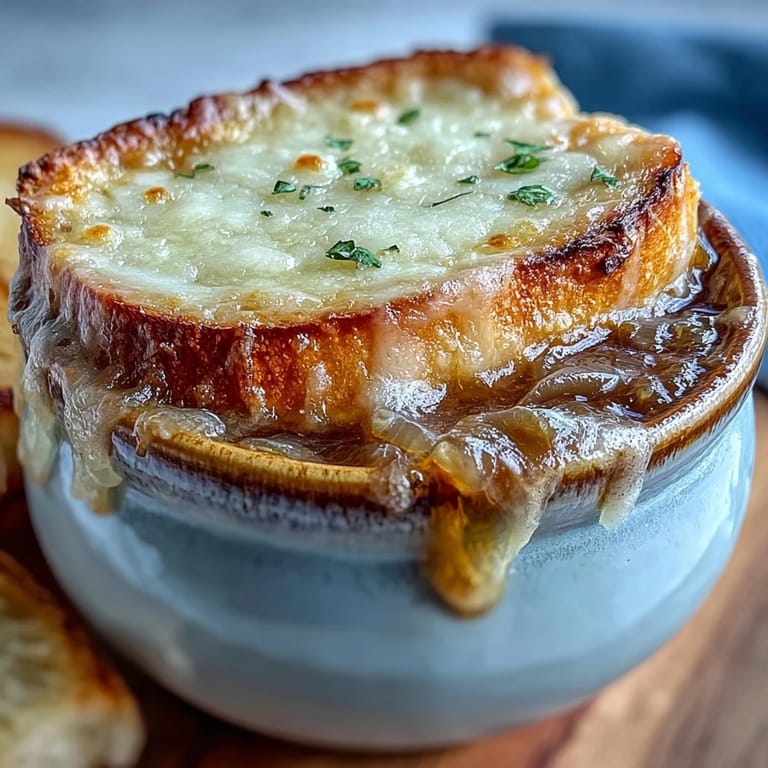
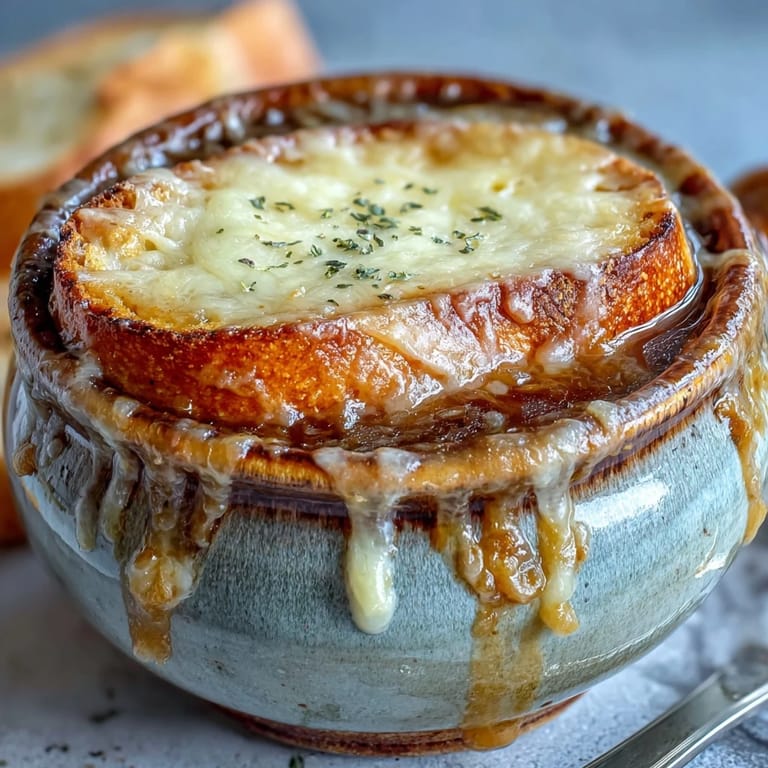
- Place your filled bowls on a baking sheet and slide them under the broiler for 2 to 3 minutes, watching as the cheese melts into golden, bubbly pools and darkens slightly at the edges. Remove carefully because the bowls and broth inside are dangerously hot, and serve immediately while everything is still steaming.
 Pin to board
 I'll never forget my grandmother tasting my version for the first time and nodding quietly, which in her language meant everything was going to be okay. She had made this soup in Paris before I was born, and somehow that moment of approval from her felt like a thread connecting me back to a time and place I'd never actually been, except through food.
The Caramelization is Everything
The magic of this soup lives entirely in that amber transformation of the onions, and once you understand what's happening chemically, you'll never rush it again. The onions contain natural sugars that break down and recombine during long, slow cooking, creating hundreds of new flavor compounds that taste nothing like raw onions and everything like something approaching sweetness. This is why you stir frequently but don't fuss constantly, and why the temperature should stay medium rather than high, because patience and gentleness create complexity while haste creates burnt bitterness that no amount of later adjustments can fix.
Wine, Stock, and Building Layers
The white wine serves a specific purpose beyond just adding flavor, it acts as an acid that cuts through the richness of the caramelized onions and butter, preventing the whole thing from becoming cloying or one-note. Your choice of stock genuinely matters here because this soup is basically a delivery system for whatever liquid you choose, so using homemade stock if you have it will change the soup from good to something your friends will ask you to make again and again. The thyme and bay leaf work quietly in the background, adding earthy herbal notes that anchor the sweetness and keep everything tasting balanced and sophisticated rather than sugary.
The Cheese Crust and Serving Strategy
This is where French onion soup transforms from a simple peasant dish into something that feels like celebration, and the broiler is your best friend in those final moments. The key to getting that perfect golden, bubbly cheese crust is making sure the bowl is oven-safe and positioned correctly on your baking sheet so the broiler heat can reach the top of the cheese evenly without the broth splattering everywhere. Serve these immediately because the magic window when everything is hot and the cheese is still bubbly lasts only a few minutes, and eating this soup slowly, letting the bread soften into the broth while pulling cheese strings between spoonfuls, is the whole point of the exercise.
- If your broiler seems weak or uneven, rotate the baking sheet halfway through the toasting time to prevent some bowls from cooking faster than others.
- Have everything assembled and ready to go before the soup is completely done, because the timing between removing the herbs and plating should feel seamless.
- Remember that broilers vary wildly in intensity, so start checking at the two minute mark rather than assuming it will take the full three minutes.
 Pin to board
 This soup asks very little of you except time and attention, and somehow that restraint is exactly what makes it taste like generosity. Make it for someone you love, or make it for yourself on a day when you need to remember that simple things done carefully can become extraordinary.
Recipe Questions & Answers
- → How long does it take to caramelize the onions properly?
The onions need 35-40 minutes of frequent stirring over medium heat to achieve deep caramelization. Adding sugar and salt halfway through helps speed up the process while developing rich, sweet flavors.
- → Can I make this soup ahead of time?
Yes, prepare the soup base up to 3 days in advance and refrigerate. When ready to serve, reheat the soup, ladle into bowls, add the bread and cheese, then broil until golden and bubbly.
- → What type of onions work best?
Yellow onions are ideal for their balance of sweetness and savory depth when caramelized. Avoid red onions as they can become bitter, and sweet onions may make the soup overly sweet.
- → Can I substitute the Gruyère cheese?
Absolutely. Emmental and Comté are excellent alternatives with similar melting properties and nutty flavors. Swiss cheese also works well, though it's milder in taste.
- → Do I need oven-safe bowls?
Yes, the bowls must be broiler-safe to withstand high heat when melting the cheese. Use ceramic or stoneware bowls specifically labeled as oven-safe, and place them on a baking sheet for easy handling.
- → What's the best stock to use?
Beef stock provides the most authentic, robust flavor. For vegetarian versions, use high-quality vegetable stock. A combination of beef and chicken stock creates exceptional depth and complexity.