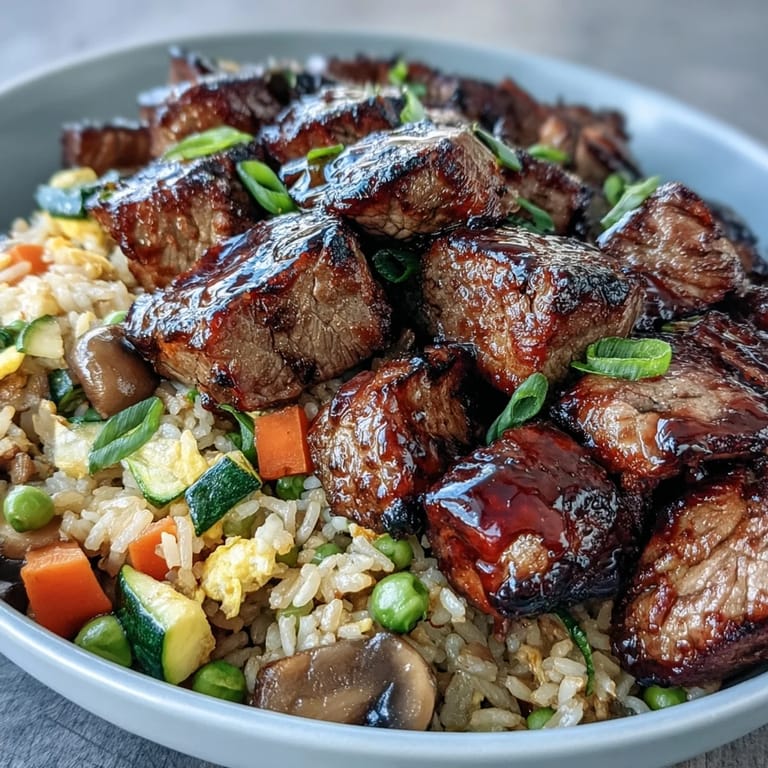
 Pin to board
 My kitchen smelled like sesame oil and sizzling steak the first time I attempted hibachi cooking at home, and honestly, I was nervous. A friend had raved about this one-pan meal so much that I felt obligated to try it, expecting some complicated technique. What I discovered instead was pure simplicity—everything cooks in one pan, the cleanup is almost laughable, and somehow it tastes like you've been working in a professional kitchen all day.
I made this for my partner on a Tuesday evening when we were both tired but didn't want takeout, and watching their face light up when they tasted it reminded me that sometimes the simplest meals hit the hardest. There's something about the combination of that seared steak and crispy rice that just works, and they've asked for it nearly every week since.
Ingredients
- Sirloin steak, cut into 1-inch cubes: Sirloin gives you that beefy flavor without breaking the bank, and the cubes cook fast enough that you don't have to worry about the outsides burning while the inside stays raw.
- Low-sodium soy sauce: I learned the hard way that regular soy sauce can make this dish too salty, so using low-sodium gives you control and room to adjust at the end.
- Mirin (or dry sherry): This adds a subtle sweetness that balances the saltiness of the soy—if you skip it, the dish tastes flat and one-dimensional.
- Sesame oil: Just a tablespoon, but it's the secret ingredient that makes your kitchen smell professional.
- Jasmine rice, cooked and cooled: Day-old rice is non-negotiable here because fresh rice will turn into a clumpy paste the moment it hits the heat, no matter what you do.
- Vegetable oil: Use something neutral like canola or vegetable oil for the cooking itself, reserving that precious sesame oil for flavoring.
- Mixed vegetables (onion, carrots, zucchini, mushrooms, peas): These are your canvas—feel free to swap in broccoli, bell peppers, or snap peas depending on what's in your fridge.
- Eggs: The eggs act as a binder and add protein, so don't skip them even if you're not an egg person.
- Unsalted butter: This finishes the dish and adds a richness that ties everything together.
- Green onions: Fresh green onions at the end brighten everything up and remind you that this meal actually has some freshness to it.
Tired of Takeout? 🥡
Get 10 meals you can make faster than delivery arrives. Seriously.
One email. No spam. Unsubscribe anytime.
Instructions
- Marinate the steak while you prep:
- Combine your steak cubes with soy sauce, mirin, sesame oil, minced garlic, and black pepper in a bowl and let them sit for at least 10 minutes. While that's happening, chop all your vegetables—this is when multitasking saves you time.
- Sear the steak until it's got a crust:
- Heat 1 tablespoon of vegetable oil in your skillet or wok over medium-high heat until it shimmers, then add the marinated steak and cook for 2 to 3 minutes, stirring occasionally. You want the outside to be browned and caramelized while the inside stays tender, so don't just let it sit there—keep moving it around.
- Build your vegetable base:
- Remove the steak and set it aside on a plate, then add the remaining oil to the same pan. Sauté your onion, carrots, zucchini, and mushrooms for 4 to 5 minutes until they're tender but still have a little bite to them. The vegetables should look slightly caramelized at the edges, which means they've developed flavor.
- Scramble the eggs into the mix:
- Push the vegetables to one side of the pan and pour your beaten eggs into the empty space. Let them set for a moment, then scramble them gently until they're just cooked through—you don't want rubbery eggs, so keep the heat at medium-high and pull them off the heat while they still look slightly wet.
- Bring everything together with the rice:
- Add your cold day-old rice to the pan along with the peas and the cooked steak, then drizzle everything with soy sauce. Toss it all together, using your spatula to break up any clumps of rice that stick together. This is where patience matters—you want every grain coated with flavor.
- Finish with butter and heat through:
- Stir in the unsalted butter and half the green onions, then cook for another 2 to 3 minutes while stirring frequently. You're looking for the rice to get slightly crispy in spots from touching the hot pan, which is what gives this dish that authentic hibachi texture.
- Taste and adjust before plating:
- Taste a spoonful and add salt and pepper as needed—remember that your soy sauce is low-sodium, so you likely have room to adjust. Serve immediately while everything is hot, garnished with sesame seeds and extra green onions for color and freshness.
 Pin to board
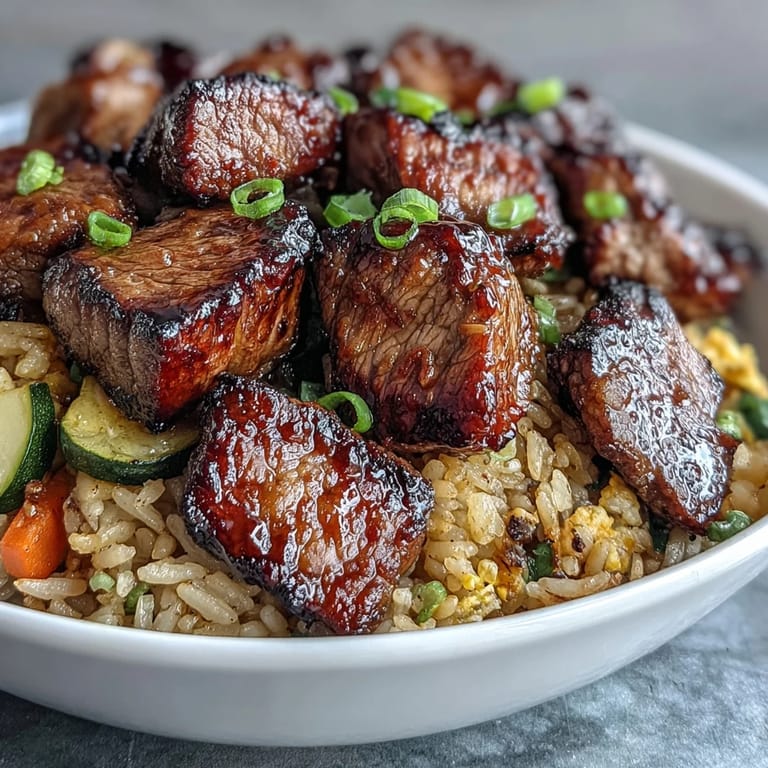
 There was a moment during dinner when my partner set down their chopsticks and just looked at the plate, then at me, and said "You made this at home?" That's when I realized this recipe isn't just about food—it's about that small confidence boost you get when something turns out better than expected. Now it's become our go-to meal when we want to feel like we're eating out without actually leaving the house.
The Secret to Crispy Rice
The difference between soggy fried rice and the kind that has actual texture comes down to that high heat and the pan itself. I used to use a regular skillet and wondered why my rice never got those crispy bits, but switching to a wok changed everything—the sloped sides let you toss the rice more efficiently, and the larger cooking surface means more contact between the rice and the hot pan. If you don't have a wok, a large skillet works fine, but push the rice around more aggressively and don't be afraid of a little char on the bottom.
Why Your Vegetables Should Be Cut the Same Size
This is one of those details that sounds fussy but actually matters for the eating experience. When I started cutting my carrots and zucchini into roughly the same 1-inch pieces, everything cooked evenly and finished at the same time, which meant no crunchy-raw vegetables sitting next to soft-mushy ones. It also makes the dish look more intentional and restaurant-quality, which is a silly thing to care about but somehow makes the meal taste better.
Make It Your Own
The beauty of this recipe is that it's forgiving and adaptable, so don't feel locked into following it exactly. I've made it with shrimp, with leftover rotisserie chicken, even with tofu for a vegetarian version, and it works every time as long as you respect the basic technique of getting your protein cooked first, then building your base with vegetables. The flavoring stays the same, but your protein can change based on what you have on hand or what you're craving.
- Swap the steak for shrimp, chicken, or tofu depending on your preference and what you have available.
- Add a drizzle of yum yum sauce or spicy mayo at the very end if you want an extra flavor boost and a little heat.
- Keep your green onions fresh and don't chop them until right before serving so they stay crispy and bright instead of getting limp and oxidized.
 Pin to board
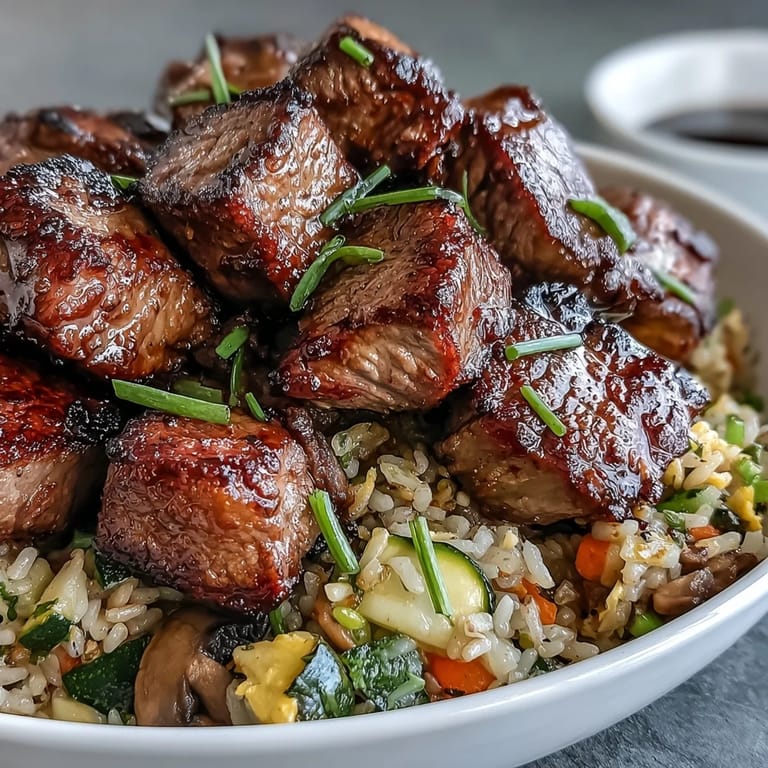
 This has become the meal I make when I want to prove to myself that home cooking can taste as good as restaurants, and honestly, it usually tastes better because it's still hot and I made it with my own hands. It's one of those recipes that sits in that perfect sweet spot between easy and impressive, which is exactly where the best weeknight dinners live.
Recipe Questions & Answers
- → Why use day-old rice for hibachi fried rice?
Day-old rice has dried out slightly, which prevents it from becoming mushy during stir-frying. The grains separate easily and develop those desirable crispy edges when cooked over high heat.
- → Can I use other cuts of beef?
Yes, ribeye, flank steak, or New York strip work well. Just slice against the grain for tenderness. Avoid tough cuts that require long cooking times.
- → How do I get restaurant-style hibachi flavor at home?
The key is high heat, proper marinade with soy sauce and mirin, fresh garlic, and finishing with butter. Don't overcrowd the pan and let ingredients sear properly.
- → What vegetables work best in hibachi?
Traditional options include onions, carrots, zucchini, mushrooms, and peas. Cut them into uniform, bite-sized pieces so they cook evenly and quickly.
- → Can I make this gluten-free?
Simply substitute regular soy sauce with tamari or coconut aminos. Verify all other ingredients are certified gluten-free, as some sauces may contain hidden gluten.
- → How do I store and reheat leftovers?
Store in an airtight container in the refrigerator for up to 3 days. Reheat in a skillet over medium-high heat with a splash of oil to restore crispiness.