 Pin to board
 There's a particular magic that happens in a kitchen on a cold evening when you commit to caramelizing onions for nearly forty minutes. My hands were tired, the pot seemed impossibly heavy, but the smell—that deep, honeyed sweetness rising from the pan—made everything else fade away. This French onion soup became my answer to those moments when nothing else felt quite right, when only something warm, savory, and utterly honest would do. It's the kind of dish that transforms patience into something worth savoring.
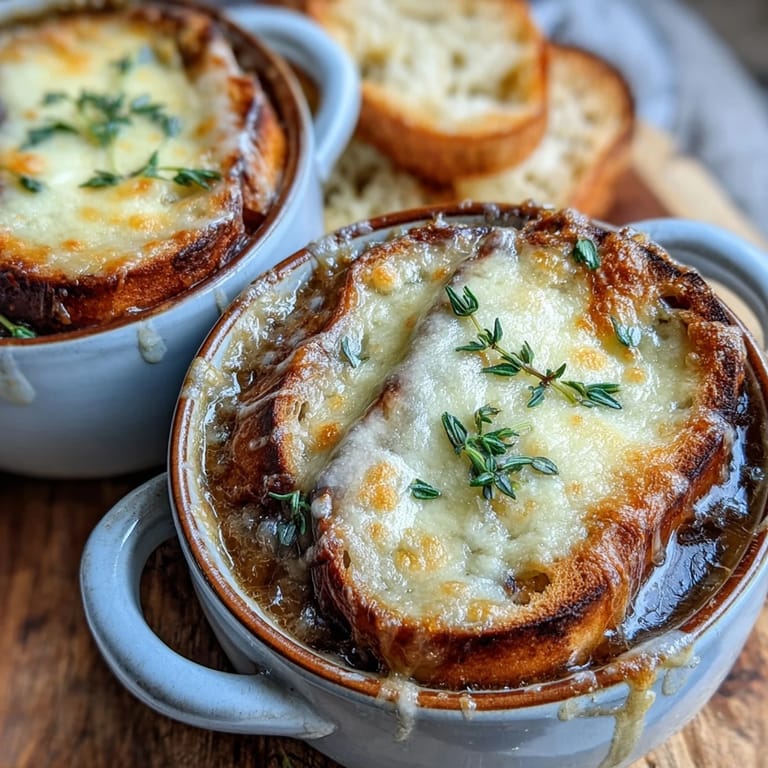
I made this for friends on a snowy Saturday when nobody wanted to brave the roads to a restaurant, so we gathered at my place instead. The soup arrived at the table in those oven-safe bowls, steam rising, cheese melted and slightly browned at the edges, and the whole room just went quiet for a moment. That's when I knew this recipe wasn't just about feeding people—it was about creating that perfect pause where everyone remembers why they love good food.
Ingredients
- Yellow onions: Four large ones sliced thin are your foundation—these become the soul of the soup through slow caramelization, turning from sharp and pungent into something almost sweet and complex.
- Leeks: Use the white and light green parts only; they add a subtle sweetness that balances the deeper onion flavor without overpowering it.
- Shallots: These bring a whisper of elegance and depth that regular onions alone can't achieve.
- Garlic cloves: Just three, minced and added toward the end of caramelizing so they don't burn and turn bitter.
- Unsalted butter and olive oil: The butter gives richness while the olive oil prevents the butter from burning during that long, slow sauté.
- High-quality beef broth: This is where you don't skimp—the broth carries everything, so use something you'd actually want to drink on its own.
- Worcestershire and soy sauce: These aren't traditional, but they're the secret weapons that deepen the soup's savory character without you tasting them directly.
- Dry white wine: The acidity cuts through the richness and lifts the whole flavor profile.
- Fresh thyme and bay leaf: Thyme especially brings an herbal note that prevents the soup from feeling one-dimensional.
- Gruyère cheese: Nutty, complex, and melts beautifully—this is the cheese that makes the difference.
- Baguette: Good-quality bread that won't turn into mush and will hold up to the broth and melted cheese.
Tired of Takeout? 🥡
Get 10 meals you can make faster than delivery arrives. Seriously.
One email. No spam. Unsubscribe anytime.
Instructions
- Warm your pot and add the fat:
- Heat the butter and olive oil together over medium heat until you see them meld and shimmer. You want the pan ready and inviting before the onions hit it.
- Begin the long, slow sauté:
- Add your sliced onions, leeks, and shallots all at once and stir them to coat in the fat. This is going to take 35 to 40 minutes, and that's not a suggestion—it's the entire point. Stir frequently, especially toward the end when they're turning that deep mahogany brown.
- Add the garlic at the finish:
- Once everything is soft and golden, add the minced garlic and cook for just two more minutes until it releases its fragrance but hasn't started to brown.
- Deglaze with wine:
- Pour in the white wine and use your wooden spoon to scrape up every brown bit stuck to the bottom of the pot—that's pure flavor you'd otherwise lose. Let it bubble and reduce slightly.
- Build the broth foundation:
- Pour in your beef broth, add the Worcestershire sauce, soy sauce, fresh thyme, and bay leaf. Bring everything to a simmer and then reduce the heat to low, letting it cook uncovered for thirty minutes while you breathe in the aroma.
- Taste and season:
- Remove the bay leaf and taste carefully—add salt and pepper to your preference, remembering that the cheese topping will add saltiness too.
- Toast the bread:
- Preheat your broiler and arrange baguette slices on a baking sheet, then toast them for about a minute per side until they're golden and slightly crisp.
- Assemble in bowls:
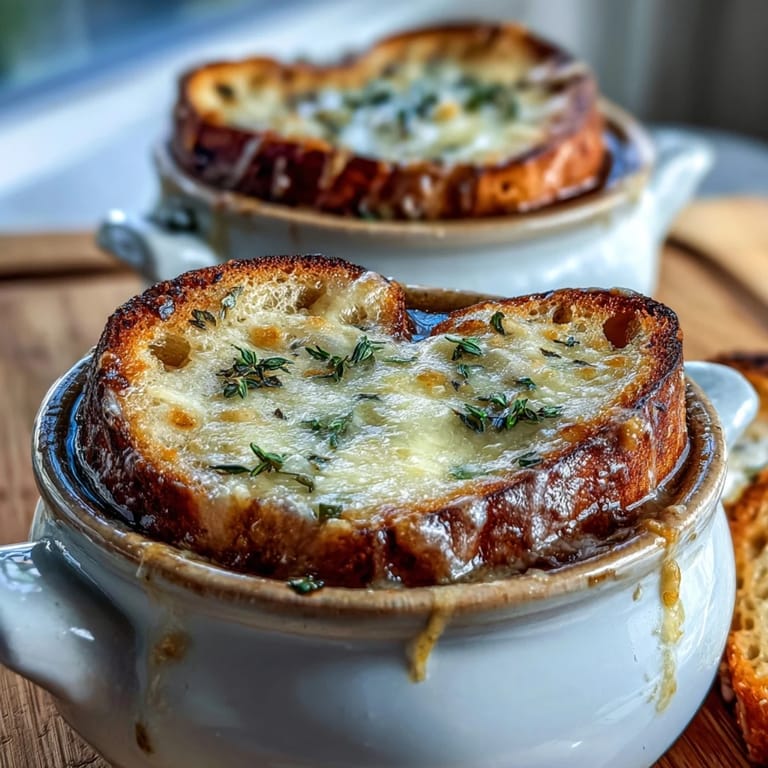
- Ladle the hot soup into oven-safe bowls and top each with two or three toasted baguette slices, then pile on a generous handful of grated Gruyère.
- Final broiler moment:
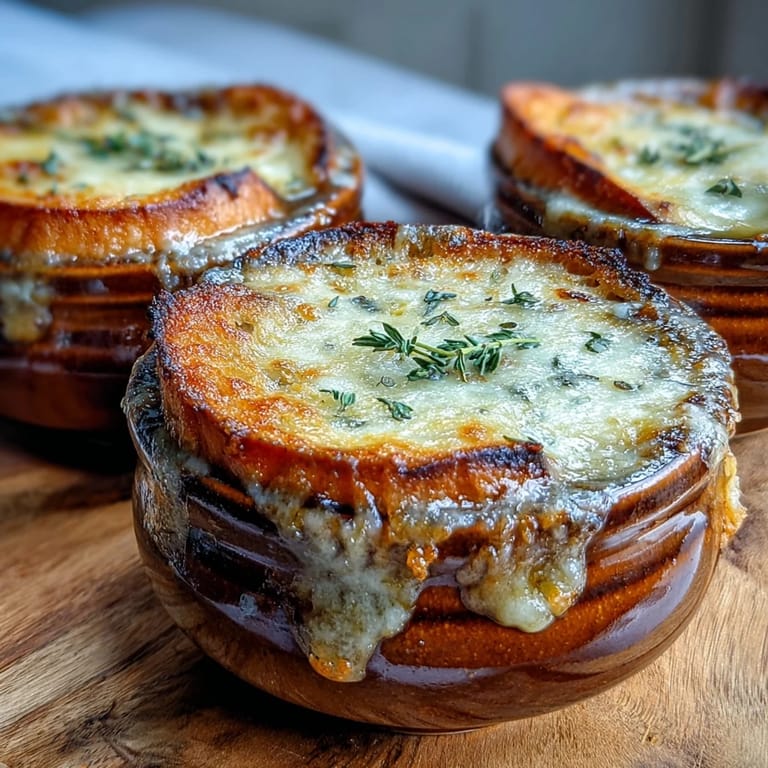
- Place the bowls under the broiler for three to five minutes, watching carefully as the cheese melts, bubbles, and gets just slightly browned in spots. Remove them carefully—the bowls are extremely hot.
- Serve immediately:
- Bring them to the table right away, maybe with a small garnish of fresh thyme if you're feeling fancy.
 Pin to board
 There's a specific kind of contentment that comes from watching someone taste this soup for the first time—that moment when the rich broth, the tender onions, and the melted cheese all hit at once, and their eyes widen just slightly. It's comfort in a bowl, but elegant enough to feel like you're sitting in a small bistro on the Left Bank, even if you're really just in your own kitchen with people you love.
The Caramelization Secret
The entire soul of this soup lives in those alliums as they slowly transform. I learned the hard way that medium heat isn't a suggestion—turn it up to high and you'll have onions that taste burnt rather than sweet, the window between perfect and ruined surprisingly narrow. Patient stirring every few minutes, especially once they start turning color, gives you control and prevents any one area from darkening too much. The payoff is onions that taste almost jammy, with layers of flavor that broth alone could never achieve.
Building Umami Without Overwhelm
Adding Worcestershire and soy sauce might seem odd in a French classic, but here's what I discovered: they work in the background, deepening the broth's savory character without you ever being able to name what's making it taste so satisfying. It's like a conductor adjusting the orchestra—you don't notice the adjustment, you just notice that everything sounds richer. The key is restraint; you're not trying to make it taste fishy or tangy, just more itself.
The Cheese Layer and How to Get It Right
Gruyère is worth seeking out because its nutty complexity holds up against the deep broth, and it melts in a way that creates those little browned bits on top that become almost caramelized themselves. If you can't find Gruyère, Emmental or Swiss work, though they're slightly milder and won't contribute quite as much character. The broiler step is where timing matters; you want the cheese melted and lightly browned, not separated into a greasy puddle or barely warmed through.
- Watch the bowls closely during broiling—every oven's broiler behaves differently, and some run hotter than others.
- If you have the time and oven space, you can assemble the bowls ahead and broil them just before serving for a more dramatic presentation.
- A small handful of Parmesan mixed in with the Gruyère adds another flavor dimension if you want to experiment.
 Pin to board
 This is the kind of soup that asks for nothing more than a quiet evening, good company, and the patience to let good things take their time. Once you make it once, you'll understand why it's been a bistro staple for generations.
Recipe Questions & Answers
- → How long does it take to properly caramelize the onions?
Plan for 35-40 minutes of patient stirring over medium heat to achieve deep golden brown onions with sweet, complex flavors essential to this dish.
- → Can I make this vegetarian?
Yes, substitute vegetable broth for beef broth and use vegetarian Worcestershire sauce or omit it entirely for a meat-free version.
- → What cheese works best if I can't find Gruyère?
Swiss or Emmental cheese make excellent substitutes, offering similar nutty flavors and melting properties for that signature golden, bubbly top.
- → Do I need oven-safe bowls?
Yes, the bowls must be broiler-safe to withstand high heat when melting the cheese. Look for ceramic or stoneware bowls specifically labeled as oven-safe.
- → Can I prepare this soup in advance?
Absolutely. The soup base can be made up to 3 days ahead and refrigerated. Reheat before adding bread and cheese, then broil just before serving.
- → Why add wine to the soup?
The white wine deglazes the pot, lifting flavorful browned bits and adding acidity that balances the sweetness of the caramelized onions.