 Pin to board
 There's something about January that makes me crave bowls—not the sad desk lunch kind, but the kind where everything warm and roasted comes together on one plate and somehow tastes like comfort. I discovered this grain bowl during a particularly gray afternoon when I had a bunch of root vegetables going soft in my crisper drawer and absolutely no inspiration for dinner. What started as throwing things together became my go-to answer whenever someone asks what I'm eating these days.
I made this for my sister on a Sunday morning when she showed up with nothing but her reusable container and a vague request for something that wouldn't make her feel bloated before her afternoon run. She came back the next day asking for the recipe, which honestly made my whole week—especially because she's the kind of person who claims she doesn't cook. Watching someone genuinely excited about what you made, even if it's just a bowl, changes how you think about feeding people.
Ingredients
- Farro or quinoa (1 cup): Farro has this nutty, slightly chewy thing going on that makes the bowl feel substantial, but quinoa is your friend if gluten bothers you or you're in a hurry since it cooks faster.
- Vegetable broth (2 cups): Use actual broth, not water, because that's where the baseline flavor lives—it's worth the small difference.
- Carrots (2 medium, diced): They caramelize beautifully and turn almost sweet in the oven, which balances out anything bitter in the greens.
- Parsnips (2, diced): These add an earthiness that regular potatoes won't, and they get crispy edges that are honestly addictive.
- Sweet potato (1 small, cubed): It brings natural sweetness and keeps the bowl from feeling too savory or one-note.
- Olive oil (3 tbsp total): Don't skimp here—good oil makes the roasting happen properly and tastes better in the dressing too.
- Dried thyme (1 tsp): Winter herbs just work with root vegetables, and thyme won't overpower anything else you've got going on.
- Sea salt and black pepper: Season in layers rather than all at once, and you'll be amazed at the difference it makes.
- Kale or Swiss chard (4 cups, chopped): Kale is sturdy and stands up to the heat, but chard wilts faster if you're short on time.
- Garlic (1 clove, minced): Just one clove—more would muscle in on everything else and turn bitter if you're not careful.
- Tahini (1/4 cup): This is the secret ingredient that makes the dressing taste like it came from somewhere professional, not from your Tuesday night.
- Lemon juice (2 tbsp): Fresh lemon only—bottled stuff changes the whole personality of the dressing.
- Maple syrup (1 tbsp): A tiny bit of sweetness balances the tahini and makes it taste rounded instead of flat.
- Warm water (2 tbsp, plus more): The warm water helps the tahini loosen up and become pourable without being weird about it.
- Dijon mustard (1/2 tsp): An ingredient most people skip but absolutely shouldn't—it adds tang and helps emulsify everything.
- Pumpkin seeds, feta cheese, and parsley (for topping): These aren't negotiable if you want the bowl to actually look like something people want to eat.
Tired of Takeout? 🥡
Get 10 meals you can make faster than delivery arrives. Seriously.
One email. No spam. Unsubscribe anytime.
Instructions
- Get your oven ready and prep the vegetables:
- Preheat to 400°F while you peel and chop your carrots, parsnips, and sweet potato into roughly the same size so they roast evenly. This takes maybe five minutes and makes everything else go faster.
- Toss and roast:
- In a bowl, coat your vegetables with olive oil, thyme, salt, and pepper, then spread them on a baking sheet in a single layer. They need 25 to 30 minutes at 400°F, and you want to stir them halfway through so they get golden on multiple sides.
- Cook the grains while vegetables roast:
- Rinse your farro or quinoa, then combine with broth in a medium saucepan and bring to a boil. Once it's boiling, lower the heat, cover it, and let it simmer—quinoa takes about 20 minutes, farro needs 30. The grain is done when it's tender and the liquid is absorbed.
- Wilt the greens:
- While grains are cooking, warm a large skillet over medium heat with olive oil, add your minced garlic for just 30 seconds so it smells amazing but doesn't burn, then add your chopped greens with a pinch of salt. Stir continuously for 3 to 4 minutes until they've transformed from raw and leafy to soft and dark.
- Make the dressing:
- Whisk tahini with lemon juice, maple syrup, warm water, and Dijon mustard until you get something smooth and creamy. If it's too thick, add more water a tablespoon at a time until it's the consistency of heavy cream—something that will coat a spoon but still drizzle.
- Assemble your bowl:
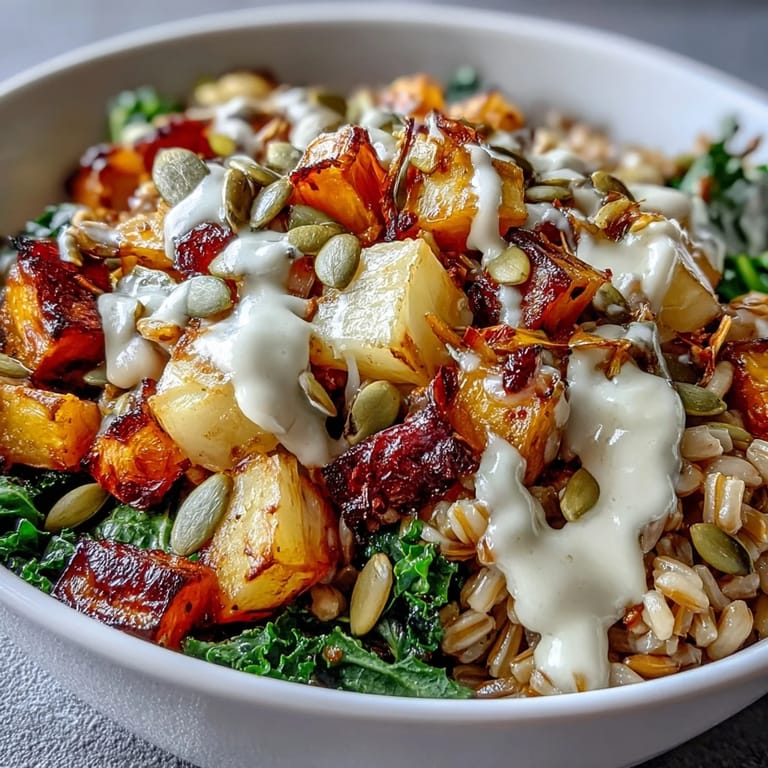
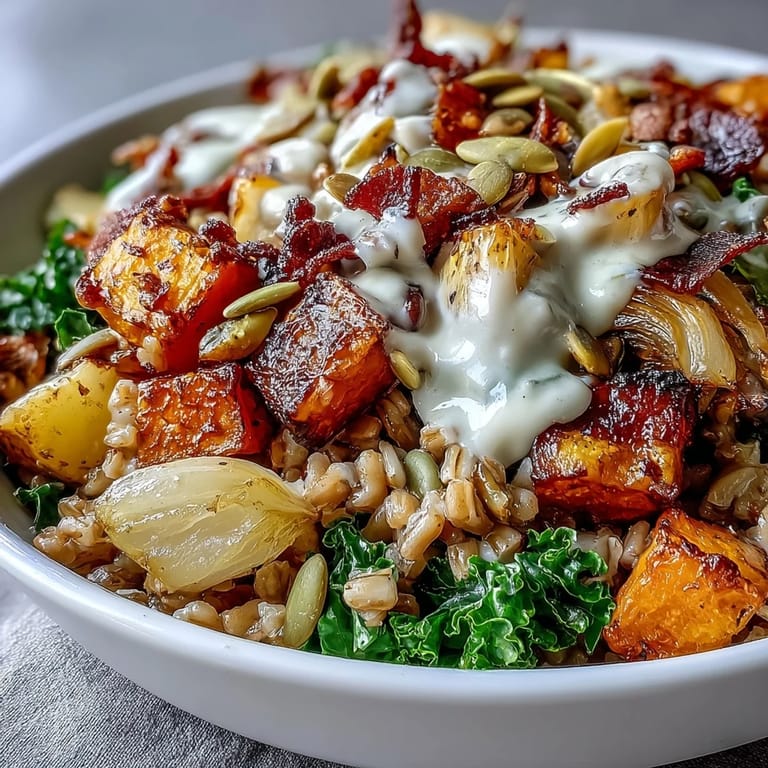
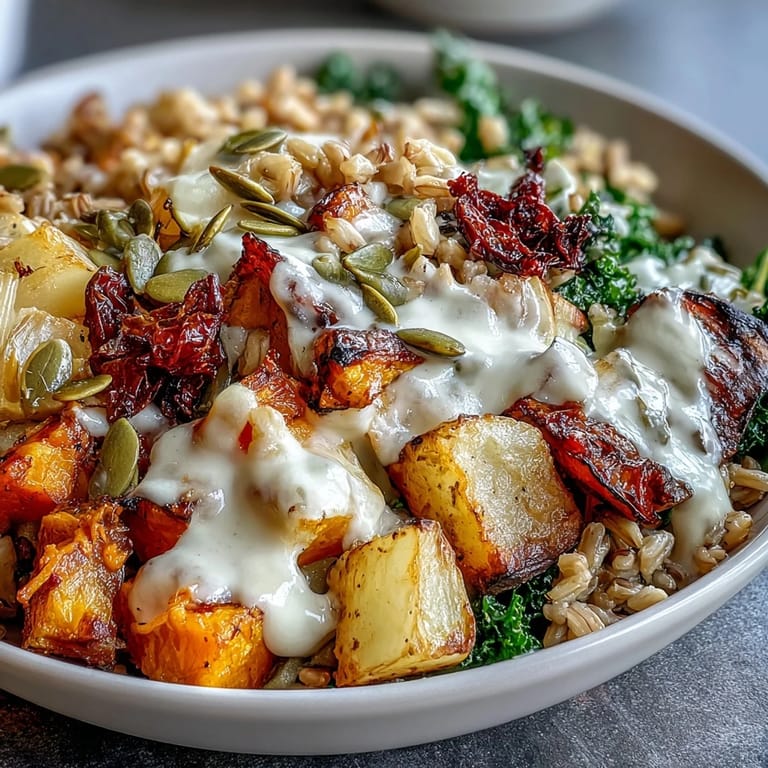
- Divide the warm grains among bowls, then top each with roasted vegetables and sautéed greens. Drizzle the dressing generously over everything so every bite has that creamy, tangy component.
- Top and serve:
- Scatter pumpkin seeds, feta cheese if you're using it, and fresh parsley over the top. Serve while everything is still warm so the textures contrast properly and the flavors actually sing.
 Pin to board
 My neighbor knocked on my door one evening asking if something good was cooking because the smell of roasting root vegetables was making her kitchen smell sad by comparison. We ended up eating together, and she asked so many questions about the tahini dressing that I realized this bowl had become something people actually wanted to understand, not just eat and forget.
Why This Bowl Works as a Meal
Most bowls feel like a collection of things thrown together, but this one actually balances itself—you've got warm grains that ground everything, roasted vegetables that add sweetness and texture, greens for substance and nutrition, and a dressing that ties it all together so nothing tastes lonely. The warm components matter too, because eating something hot in winter is about more than just hunger.
Swaps and Variations
I've made this with roasted chickpeas added in when I needed more protein, and it's honestly better that way if you're eating it as your whole dinner rather than alongside something else. Beets work brilliantly if you have them, though they'll stain everything slightly pink which is weirdly beautiful. For the greens, I've used spinach when I'm lazy and it's fine, but the heartier greens really do handle the warm bowl treatment better without falling apart into mush.
Storage and Make-Ahead Tips
The grain and vegetables will keep separately in containers for about four days, which means you can make this bowl three different times without actually cooking twice. Store the dressing separately because if it sits on the warm grains for more than an hour it gets soaked up and loses its creamy texture. The greens are best cooked fresh, but honestly if you sauté them the night before and reheat gently, nobody will know the difference.
- Assemble the bowl no more than 10 minutes before eating if you want everything to maintain its distinct texture.
- If you're meal prepping, bring the components separately and dress right before eating.
- The dressing actually tastes better the next day once the flavors meld, so make extra and use it on literally anything else you eat this week.
 Pin to board
 This bowl became the thing I make when I want to feel like I'm taking care of myself but don't want it to feel like a chore. That's honestly all any recipe needs to be.
Recipe Questions & Answers
- → Can I make this ahead of time?
Yes! The grains and roasted vegetables store well for up to 4 days. Keep the dressing separate and add fresh greens when serving.
- → What other grains work well?
Brown rice, wheat berries, barley, or millet all work beautifully. Just adjust cooking time according to package instructions.
- → How can I add more protein?
Try roasted chickpeas, grilled chicken, baked tofu, or a soft-boiled egg. Lentils also make an excellent addition.
- → Can this be frozen?
The grains and roasted vegetables freeze well for up to 3 months. Thaw overnight and reheat before adding fresh greens and dressing.
- → What greens can I substitute?
Spinach, collard greens, mustard greens, or arugula all work. Adjust cooking time based on the green's toughness.