 Pin to board
 My neighbor Mrs. Chen taught me this soup on a gray November afternoon when the kitchen smelled like wet leaves and cold was creeping in through the windows. She'd been making versions of it for decades, she said, and the secret wasn't fancy—it was letting those dried shiitakes talk, really talk, in hot water before anything else happened. I watched her work with the kind of calm efficiency that comes from knowing a recipe in your bones, and by the time we sat down with steaming bowls, I understood why this soup had stayed with her through so many seasons.
Last winter my partner was under the weather, and I made this soup without really thinking—it just felt right, like something warm and substantial that wouldn't ask too much of a tired body. He had three bowls that night, and when he asked for it again the next day, I knew I'd stumbled onto something that worked beyond just being food. Now whenever someone mentions they're feeling run down or the weather turns, this is what I reach for.
Ingredients
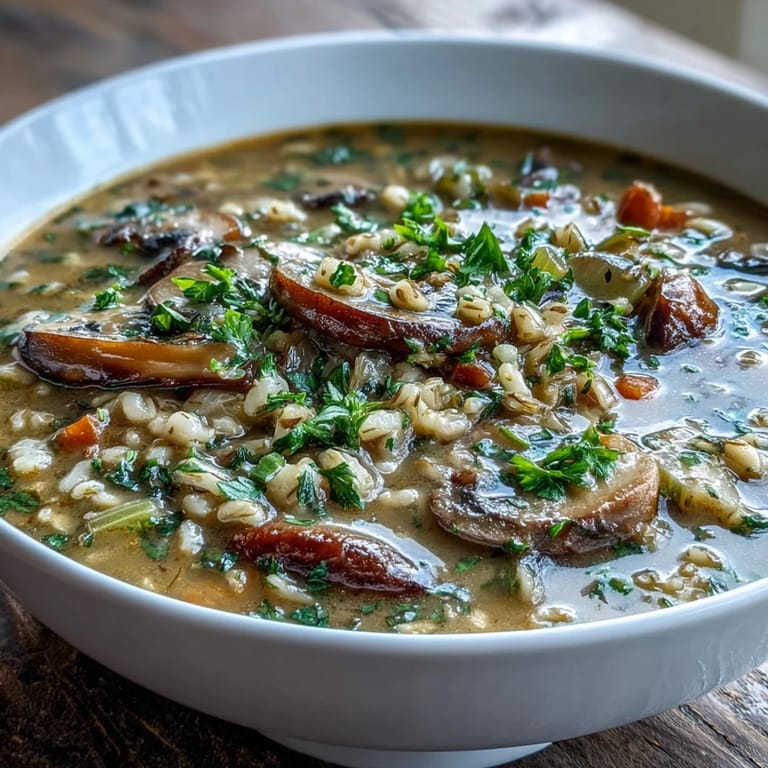
- Dried shiitake mushrooms, 1 oz (28 g): These are your backbone—they'll soak up hot water and release this umami-rich liquid that makes the whole soup taste like someone spent hours building flavor from scratch, which in a way, you have.
- Fresh white mushrooms, 8 oz (225 g), sliced: These add texture and that fresh mushroom moment, but they work best alongside the dried ones rather than instead of them.
- Pearl barley, 3/4 cup (130 g), rinsed: Rinsing matters more than you'd think—it removes the starch coating and keeps your soup from turning gluey as it sits.
- Olive oil, 2 tbsp: Just enough to coat the pan and carry the aromatics without making this soup feel heavy.
- Onion, carrots, celery, 1 medium and 2 medium and 2 stalks respectively, diced: The classic trio that forms the base of almost every soup that tastes homemade rather than processed.
- Garlic cloves, 3, minced: Add these after the softer vegetables or they'll brown and turn bitter before the soup even gets going.
- Low-sodium vegetable broth, 8 cups (2 L): Low-sodium matters because you're building seasoning as you go, and you don't want salt making decisions for you early on.
- Bay leaves, 2, dried thyme, 1 tsp, dried parsley, 1 tsp: These herbs are quiet workers—they build depth without announcing themselves, which is exactly what you want in something this hearty.
- Salt and freshly ground black pepper, to taste: Taste as you finish, because every batch of broth and every stove behaves differently.
- Fresh parsley, 2 tbsp, chopped (optional): A garnish that wakes everything up and makes the bowl look like someone actually cared.
Tired of Takeout? 🥡
Get 10 meals you can make faster than delivery arrives. Seriously.
One email. No spam. Unsubscribe anytime.
Instructions
- Wake up the dried mushrooms:
- Pour 2 cups of boiling water over your dried shiitakes in a heatproof bowl and let them sit for 20 minutes—you'll watch them soften and darken, and the water will turn this deep amber color that already smells like money. After draining, slice them and strain that soaking liquid through a fine sieve or cheesecloth to catch any hidden grit, because you want all the flavor without the crunch.
- Build your flavor base:
- Heat olive oil in your large soup pot over medium heat and add your diced onion, carrots, and celery, cooking for about 5 minutes until they soften and start to smell sweet. Then add the minced garlic and let it bloom for just a minute—this is the moment the kitchen starts to smell like a real kitchen.
- Introduce the mushrooms:
- Stir in both your fresh sliced mushrooms and the soaked shiitakes, and watch them release their juices over the next 5 minutes or so. This is when the whole pot starts smelling like something substantial is happening.
- Assemble and simmer:
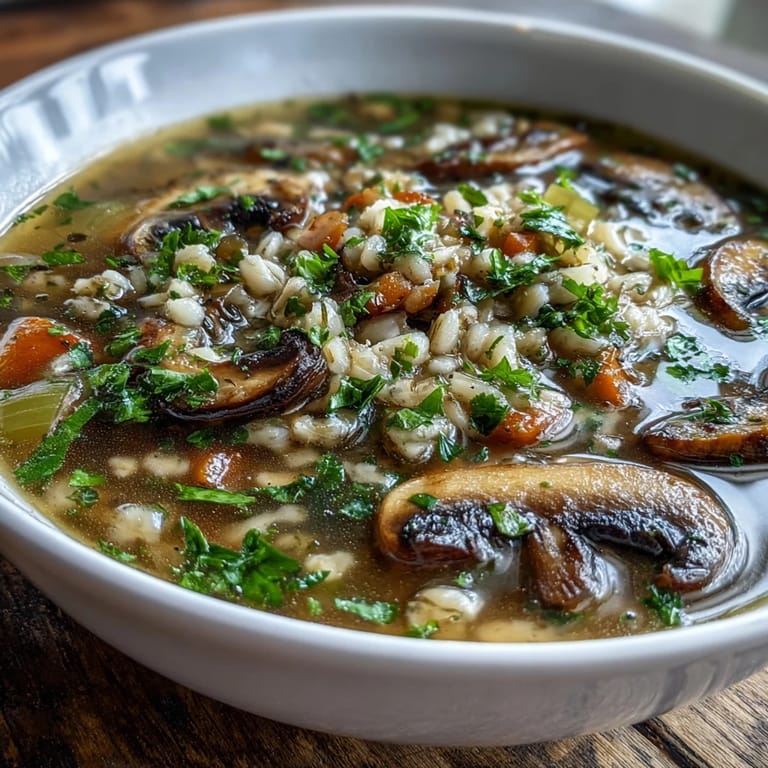
- Add your rinsed barley, that precious mushroom soaking liquid you strained, and all 8 cups of vegetable broth, then season with bay leaves, thyme, parsley, salt, and pepper. Bring everything to a boil, then lower the heat and cover, letting it simmer gently for 50 to 60 minutes, stirring now and then, until the barley has softened completely and the flavors have married into something that tastes like comfort.
- Finish and serve:
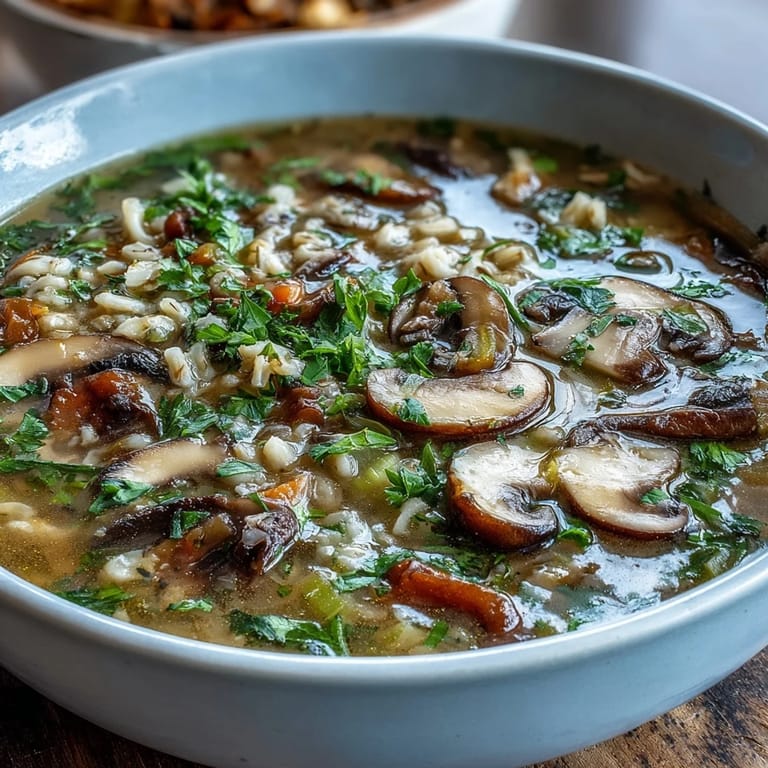
- Fish out the bay leaves, taste the soup, and adjust seasoning if it needs salt or pepper or a little more time. Ladle it into bowls, add a sprinkle of fresh parsley if you have it, and serve it hot enough to warm your hands through the bowl.
 Pin to board
 There's something almost meditative about stirring a pot of soup as it simmers, watching the barley soften and the color deepen, knowing that time and heat are doing most of the actual work. It reminds me why people have made soups like this for centuries—there's a kind of magic in simple ingredients becoming something that tastes like pure nourishment.
When Deli Food Tastes Like Home
This soup carries the DNA of Jewish deli culture, where nothing gets wasted and every ingredient earns its place by adding actual flavor rather than just presence. The combination of barley and mushrooms is old enough that you can almost taste the generations of cooks who figured out this was worth keeping around. Making it yourself means you understand why it lasted—because it actually works.
How to Make It Your Own
While the classic version is nearly perfect on its own, this soup loves small variations based on what's in your kitchen or what your body is asking for. A handful of diced potatoes or parsnips added with the vegetables makes it even more substantial, and honestly, some people swear by a splash of red wine stirred in toward the end. If you eat chicken, swapping vegetable broth for chicken broth takes it in a slightly different direction while keeping all the same comfort.
Storage, Reheating, and Making It Last
This soup is one of those rare dishes that actually tastes better the next day or the day after, once everything has had time to know each other properly. It stores beautifully in the refrigerator for up to five days, and because it thickens as it sits, you'll want to have some extra broth or water standing by when you reheat it to get back to that perfect consistency. You can also freeze portions for up to three months, though the barley will soften further, which isn't a bad thing if you're okay with something more porridge-like.
- Reheat gently on the stove rather than blasting it in the microwave, which tends to make the barley separate from the broth.
- Keep your extra broth at room temperature rather than cold so you're not shocking the soup back awake.
- Taste it again before serving because your memory of the seasoning might be stronger than what's actually in there.
 Pin to board
 This is one of those soups that asks very little of you but gives back warmth, substance, and the kind of comfort that makes you feel taken care of. Make it on a Sunday afternoon and let it carry you through whatever the week decides to bring.
Recipe Questions & Answers
- → Can I use different types of mushrooms?
Yes, you can substitute cremini, portobello, or oyster mushrooms for the white mushrooms. The dried shiitake provides essential depth, but you can also use dried porcini for a different flavor profile.
- → How do I prevent the barley from becoming too thick?
Pearl barley absorbs liquid as it sits, so the soup naturally thickens over time. When reheating leftovers, simply add extra vegetable broth or water until you reach your desired consistency.
- → Can I make this soup in advance?
Absolutely. This soup actually tastes better the next day as the flavors meld together. Store in an airtight container in the refrigerator for up to 5 days, or freeze for up to 3 months.
- → Is there a gluten-free alternative to barley?
Yes, substitute pearl barley with wild rice, brown rice, or quinoa for a gluten-free version. Adjust cooking time accordingly, as rice typically cooks faster than barley.
- → Why strain the mushroom soaking liquid?
Dried mushrooms often contain grit and sediment that settles at the bottom during soaking. Straining through a fine sieve or cheesecloth removes these particles while preserving the flavorful liquid.
- → Can I add meat to this soup?
Yes, you can add cooked chicken, beef, or sausage for a heartier version. Replace vegetable broth with chicken or beef broth to complement the meat addition.