 Pin to board
 My neighbor Farida invited me over one cold February evening, and the moment I stepped into her kitchen, this soup was already simmering—the aroma of turmeric and fresh herbs so thick it seemed to wrap around me like a shawl. She caught me inhaling deeply and laughed, explaining that her grandmother made this same pot every winter in Tehran, and now it's become her quiet ritual whenever snow threatens outside. That night, watching her swirl sour cream into each bowl with practiced precision, I realized this wasn't just a recipe—it was a conversation between generations, told through barley and mint.
I brought this soup to a potluck last spring, nervous because everyone else had brought salads and casseroles, and somehow this humble pot became the thing people circled back to all evening. By the end, three people were photographing the recipe card, and one asked if I could make it for her family dinner—that moment taught me that food made with intention and care always stands out, even when it's not fancy.
Ingredients
- Beef stew meat (500 g, cut into 2 cm cubes): Choose pieces with a little marbling; they'll stay tender through the long simmer and add genuine depth to the broth.
- Pearl barley (1/2 cup, rinsed): Rinsing removes excess starch and prevents the soup from turning gluey—this one detail changed everything for me.
- Dried lentils (1/2 cup, rinsed): These stay intact during cooking and add protein without mushiness; red lentils would dissolve into the broth, which works too if you prefer a creamier texture.
- Dried white beans or cannellini beans (1/2 cup, soaked overnight): Soaking matters here because it shortens cooking time and makes them digest better; don't skip it.
- Onion (1 large, finely chopped): The sweetness that builds the foundation of everything else; take time to let them turn properly golden.
- Carrots (2 medium, diced): Their natural sugar emerges during cooking and balances the earthiness of the legumes.
- Celery (2 stalks, diced): Adds a subtle vegetal complexity that ties all the flavors together.
- Garlic (2 cloves, minced): Mince finely so it disperses evenly and doesn't leave harsh chunks.
- Fresh parsley (1/2 cup, chopped): The mild green note that keeps the soup from tasting too heavy.
- Fresh cilantro (1/2 cup, chopped): Stir this in at the end so it keeps its bright, peppery quality.
- Fresh dill (1/4 cup, chopped): Brings a subtle anise note that whispers rather than shouts.
- Fresh chives (1/4 cup, chopped): A delicate onion whisper that adds the final layer of herb complexity.
- Dried mint (2 tbsp): Use this for both the fried onion topping and to scatter directly into bowls if you like extra intensity.
- Sour cream (200 g): The cool, tangy swirl that transforms each spoonful; Persian kashk is more authentic but harder to find.
- Olive oil (2 tbsp): Use good quality here because it's not being cooked away.
- Butter (1 tbsp, for fried onions): Butter crisps the onions better than oil; it's worth the small amount.
- Ground turmeric (1 tsp): This warm spice is what makes the soup unmistakably Persian—don't reduce it.
- Ground black pepper (1/2 tsp): Freshly ground tastes noticeably better than pre-ground.
- Salt (1 1/2 tsp, plus more to taste): Taste as you go because salt levels shift as the broth reduces.
- Beef or vegetable stock (2 liters): Good stock makes the difference between okay soup and soup people remember; homemade is worth the effort.
Tired of Takeout? 🥡
Get 10 meals you can make faster than delivery arrives. Seriously.
One email. No spam. Unsubscribe anytime.
Instructions
- Brown the beef for color and depth:
- Heat olive oil in your large pot over medium-high heat until it shimmers slightly, then add the beef cubes in a single layer—don't crowd them or they'll steam instead of brown. Let them sit for 2-3 minutes before stirring so they develop that caramelized crust that adds real flavor to the broth.
- Build the flavor base:
- Remove the beef and add the remaining oil to the pot, then cook the onions slowly until they turn a deep golden amber, about 6 minutes—this patience pays off. Add garlic, turmeric, pepper, and salt, stirring constantly for just 1 minute so the spices bloom and release their aromatics into the oil.
- Add the vegetables:
- Toss in carrots and celery, letting them soften for 3 minutes while the spices continue to warm through everything. This step bridges the flavored oil and the broth that's coming next.
- Combine everything and simmer low:
- Return the beef to the pot along with barley, lentils, beans, and stock, then bring it all to a rolling boil before immediately lowering the heat to a gentle simmer. Cover and let it bubble quietly for 1 hour 30 minutes, stirring occasionally so nothing settles to the bottom and sticks.
- Finish with fresh herbs:
- Stir in all the fresh parsley, cilantro, dill, and chives, then simmer uncovered for 10 more minutes so the herbs stay vibrant rather than turning dull. Taste and adjust salt—the broth concentrates as it simmers, so you might need less than you think.
- Crisp the mint onions:
- While the soup finishes, melt butter in a small skillet over medium-low heat and add thinly sliced onion, stirring occasionally until it's deeply golden and crisp, about 10 minutes—this should smell sweet and almost caramelized. Stir in dried mint and cook for 1 more minute just to wake it up, then set aside.
- Plate and serve:
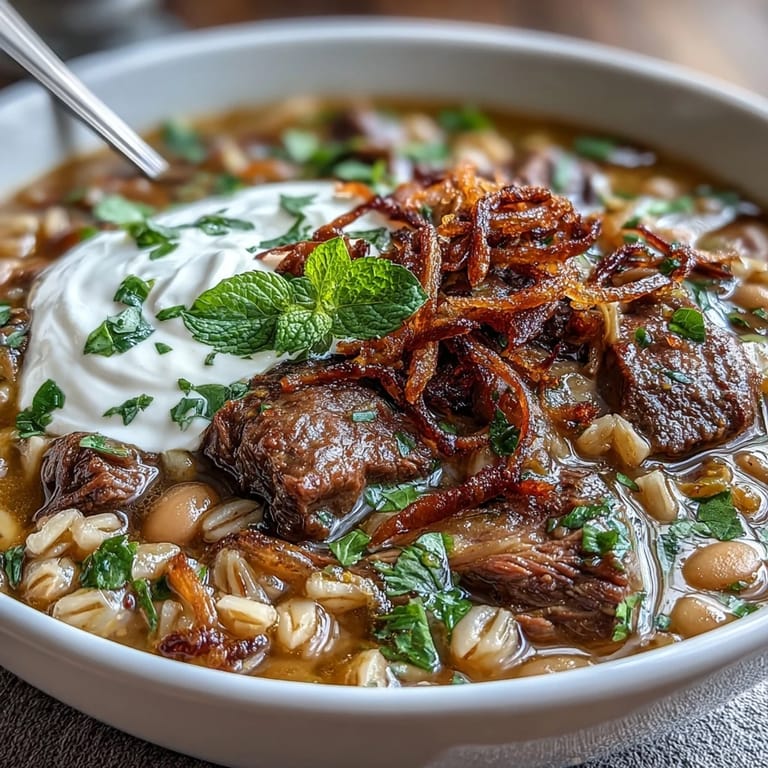
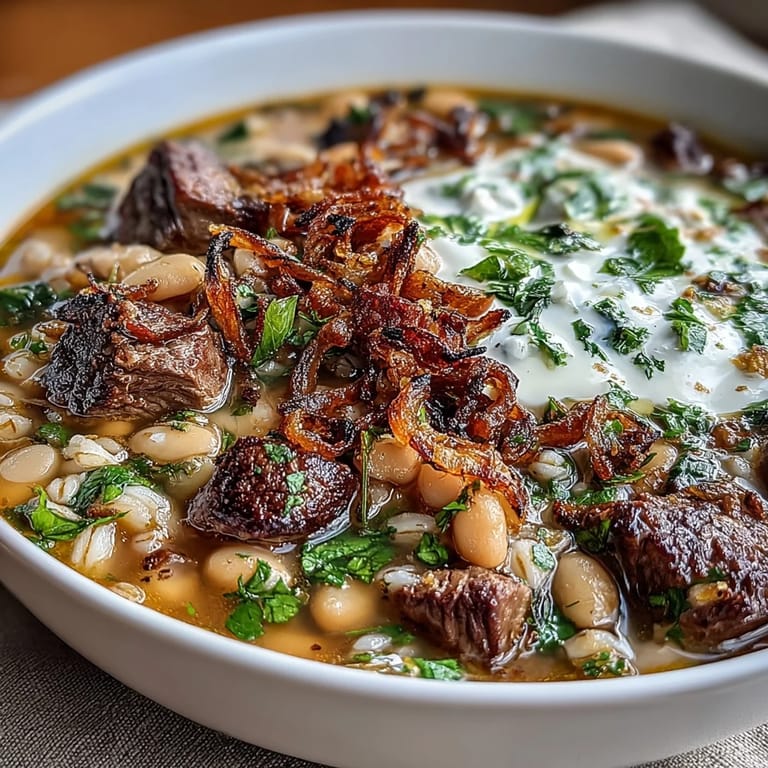
- Ladle the hot soup into bowls, then swirl 1 to 2 tablespoons of sour cream into each one—it will marble beautifully through the broth. Top with the mint-fried onions so they stay crisp and scattered over the surface.
 Pin to board
 There's a moment near the end of cooking when you lift the lid and the steam hits your face, and everything smells so complete that you know you've got it right. I remember that feeling most from cooking this soup on a raw November afternoon when I was alone in the house, and somehow making it for no one but myself felt like the most generous thing I could do.
The Persian Soul of This Soup
This soup is rooted in Persian cooking philosophy, which believes that food should heal and nourish the whole person, not just fill the stomach. The combination of legumes and grains provides complete protein, while the fresh herbs aren't just decoration—they're medicine, cooling and balancing the warming spices like turmeric. Every element has a purpose, which is why Farida's grandmother kept making it through hard winters: it was sustenance and care in the same bowl.
Variations That Actually Work
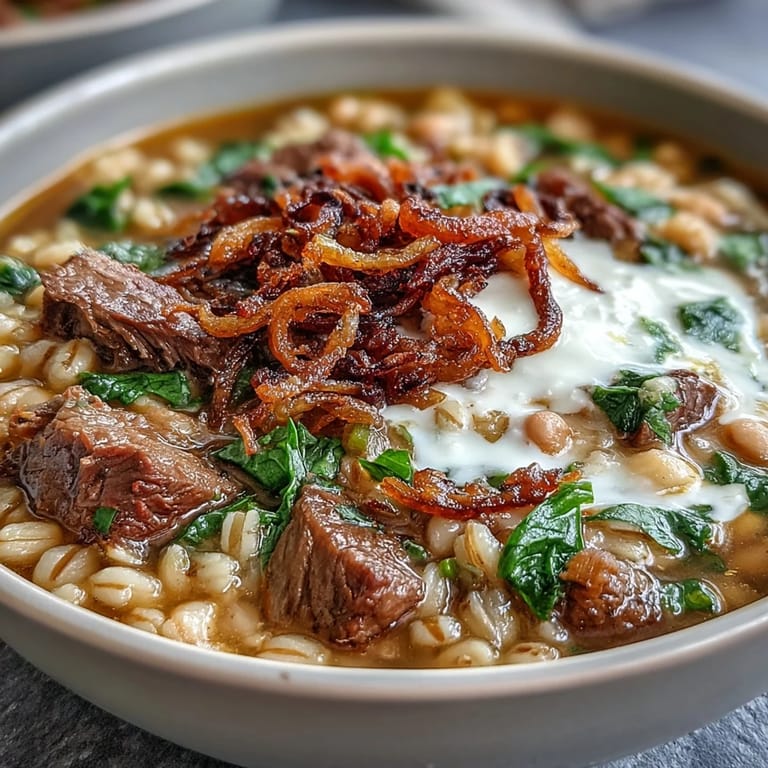
I've made this soup a dozen different ways depending on what's in my pantry or what season we're in. Spinach stirred in at the very end adds color and iron, while roasted beet greens bring an earthy sweetness that nobody expects but everyone loves. For a vegetarian version, simply skip the beef, use vegetable stock instead, and add an extra 1/2 cup of legumes so the soup stays substantial—it honestly tastes just as satisfying, different but not lesser.
Serving and Storage Wisdom
This soup gets even better the next day because the flavors have time to settle and deepen into each other, so don't hesitate to make it ahead. Store it without the sour cream and mint onions, which you'll add fresh when reheating; it keeps in the refrigerator for 4 days or freezes for up to 3 months. Serve it with crusty bread or Persian flatbread to soak up every bit of broth, and maybe a small spoon of kashk alongside the sour cream if you're feeling adventurous.
- The mint-fried onions can be made hours ahead and stored in an airtight container so they stay crisp.
- If the soup is too thick after a day in the fridge, thin it with a splash of stock or water when you reheat it.
- This is the kind of soup that tastes better when you slow down and eat it in a quiet moment, not rushed.
 Pin to board
 This soup has become my answer to almost everything: a cold day, someone who needs comfort, a night when cooking feels important. It's the kind of dish that reminds you why people have been gathering around tables for thousands of years.
Recipe Questions & Answers
- → Can I make this soup vegetarian?
Yes, simply omit the beef and use vegetable stock instead of beef stock. The combination of barley, beans, and lentils provides excellent protein and texture.
- → What can I substitute for sour cream?
For a more authentic Persian flavor, use kashk (fermented whey). Greek yogurt also works well as a tangy alternative.
- → Do I need to soak the beans overnight?
Yes, soaking the white beans overnight is recommended to reduce cooking time and improve digestibility. Drain them before adding to the soup.
- → Can I add other vegetables to this soup?
Absolutely. Spinach, beet greens, or chopped tomatoes make excellent additions. Add leafy greens during the last 10 minutes of cooking.
- → How do I store leftover soup?
Store cooled soup in an airtight container in the refrigerator for up to 4 days. The barley and beans will absorb liquid, so add extra stock when reheating.
- → What makes this soup Persian-inspired?
The combination of fresh herbs, turmeric, sour cream or kashk, and the signature mint-fried onion garnish are hallmarks of Persian cuisine, particularly the traditional dish called Ash-e Jo.