 Pin to board
 There's something about October that makes me crave butternut squash soup, but what really won me over was the afternoon my neighbor dropped off an armful of squashes from her garden and I had no idea what to do with them. I roasted them on a whim, filled the kitchen with this nutty, caramelized aroma, and discovered that the magic wasn't in complexity but in patience—letting those vegetables soften and sweetify under heat before blending them into something silky. Now whenever I make this, I'm back in that moment of pleasant surprise, realizing comfort food doesn't require a long list of tricks.
I made this for my sister during one of those gray November afternoons when she needed something warm and uncomplicated, and watching her face light up at the first spoonful reminded me that the best meals are often the simplest ones. She asked for the recipe right then, and I loved that she didn't need fancy steps or rare ingredients—just honest squash and good intentions.
Ingredients
- 1 large butternut squash (about 2 lbs), peeled, seeded, and cubed: The star of the show—look for one that feels heavy for its size, a sign it's dense and sweet inside.
- 1 medium yellow onion, chopped: Adds natural sweetness and depth that balances the squash without any additional sugar.
- 2 garlic cloves, peeled: Keep them whole during roasting so they turn golden and mild rather than sharp and raw.
- 1 medium carrot, peeled and chopped: A subtle sweetness booster that roasts beautifully alongside the squash.
- 4 cups vegetable broth (gluten-free, if needed): The liquid base that becomes infused with roasted vegetable flavor as everything simmers.
- 2 tbsp olive oil: Coats the vegetables for that essential caramelization and adds richness to every spoonful.
- 1 tsp salt: Brings out the natural flavors of the roasted vegetables.
- 1/2 tsp black pepper: A gentle bite that keeps the soup from tasting one-dimensional.
- 1/2 tsp ground nutmeg: The secret that makes people ask what you put in there—it whispers rather than shouts.
- 1/4 tsp cayenne pepper (optional): A tiny pinch adds warmth and complexity if you want to nudge it beyond pure comfort.
- 1/4 cup heavy cream or coconut cream (optional): Swirled in at the end for luxurious richness, or skip it if you prefer something lighter.
- Toasted pumpkin seeds (optional): Scattered on top for a textural surprise and toasted crunch.
- Fresh thyme (optional): A few leaves add an earthy note and look lovely in the bowl.
Tired of Takeout? 🥡
Get 10 meals you can make faster than delivery arrives. Seriously.
One email. No spam. Unsubscribe anytime.
Instructions
- Heat your oven and prep the vegetables:
- Set the oven to 400°F and while it preheats, cube your squash and chop the onion and carrot into roughly even pieces so they roast at the same pace. This small bit of attention makes the difference between unevenly cooked vegetables and perfectly tender ones.
- Coat and roast until caramelized:
- Toss everything on a baking sheet with olive oil, spread it out in a single layer, and slide it into the oven. Stir it halfway through—you'll notice the edges turning golden and the kitchen smelling impossibly good after about 30 to 35 minutes.
- Transfer to your pot:
- Once the vegetables are tender and caramelized, scoop them into a large pot and pour in the vegetable broth along with salt, pepper, nutmeg, and cayenne if you're using it.
- Simmer and blend the flavors:
- Bring everything to a gentle simmer over medium heat and let it bubble quietly for about 10 minutes—this gives the spices time to meld and the broth to absorb the roasted flavor. Then grab your immersion blender and blend until the soup is completely smooth and silky.
- Taste and adjust:
- This is crucial—give it a spoon and taste before deciding if you need more salt, pepper, or nutmeg. Stir in the cream if you'd like that richness, taste again, and adjust one final time.
- Serve with care:
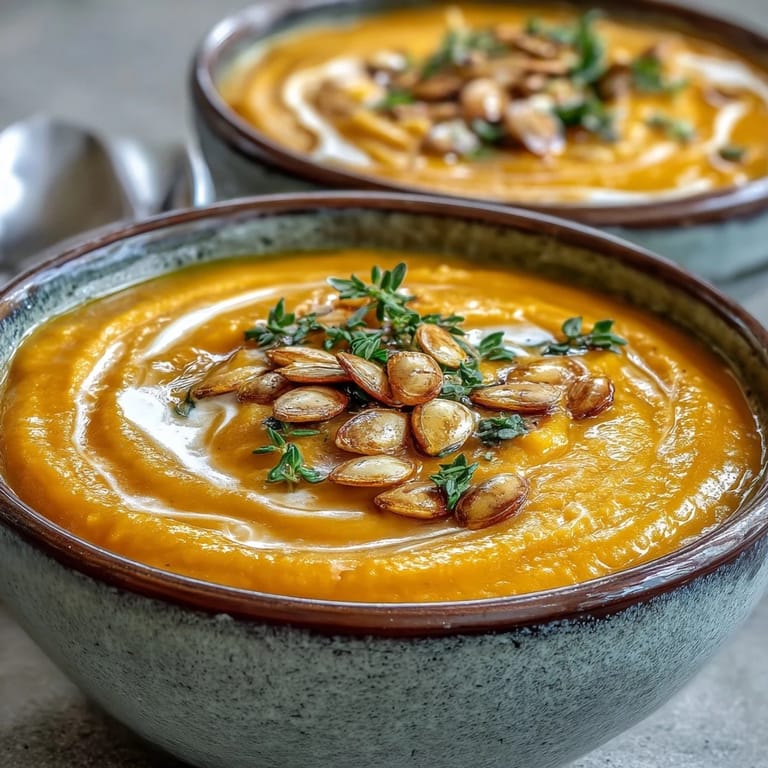
- Pour into bowls while it's still steaming hot, then drizzle with cream if you didn't add it to the whole pot, scatter some toasted pumpkin seeds on top, and tear off a tiny leaf of fresh thyme for garnish.
 Pin to board
 I learned the power of this soup when a friend who never eats vegetables asked for seconds, and I realized it wasn't sneaking vegetables past anyone—it was showing them what vegetables could actually taste like when treated with respect. That shift from obligation to genuine craving is what keeps me making this year after year.
The Roasting Secret
The difference between mediocre and magnificent butternut squash soup is almost entirely in the roasting. When you roast vegetables instead of boiling them, their natural sugars concentrate and caramelize, creating depth and richness that you simply cannot achieve any other way. I've made this soup a dozen different ways, and I always come back to the oven because those 30 minutes of roasting are where the magic actually happens.
Flavor Building and Spice Balance
Nutmeg is the ingredient that makes people pause and ask what's in this, but it should never be obvious—it should feel like a whisper, a warmth that makes you feel cozy without realizing why. Start with half a teaspoon, taste, and add more if you'd like; you can always add, but you can't take it back. The cayenne is completely optional, but it's my secret weapon on days when I want the soup to feel less like a cuddle and more like an adventure.
Serving Suggestions and Finishing Touches
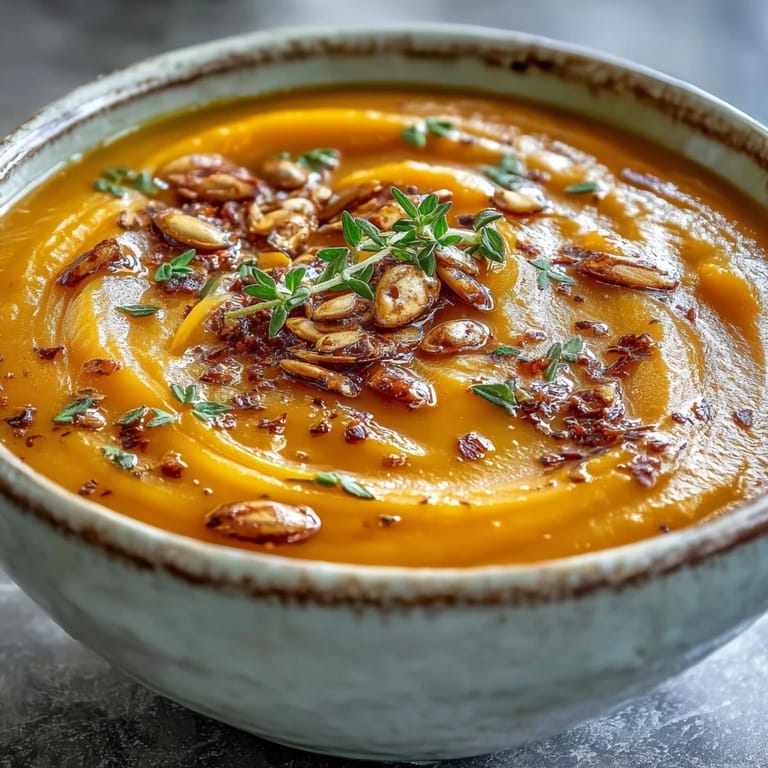
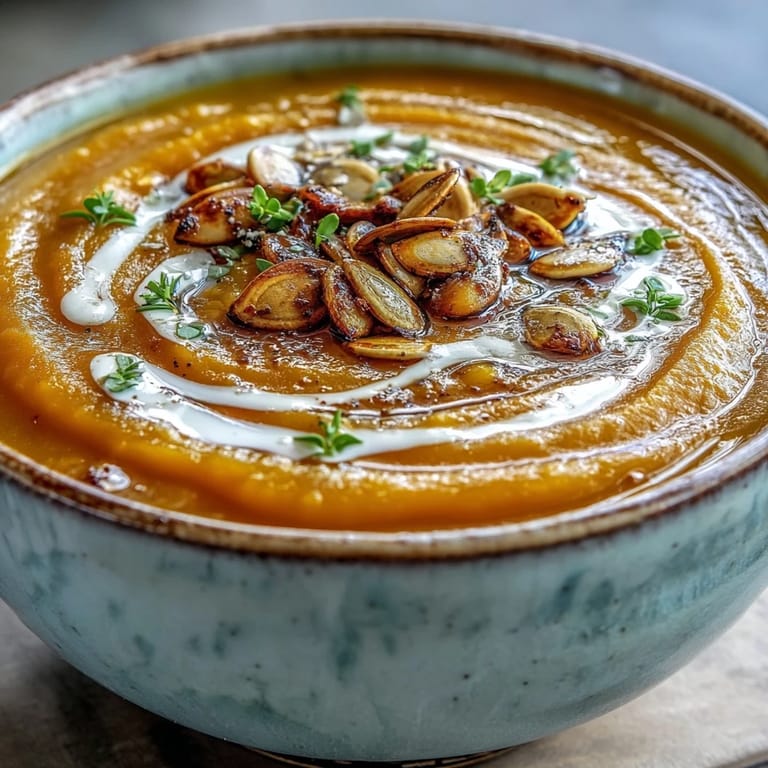
This soup is naturally vegetarian and gluten-free, which makes it feel special without requiring special attention. The beauty is in its simplicity, but the finishing touches—a swirl of cream, a scatter of toasted pumpkin seeds, a few thyme leaves—turn a simple bowl into something people want to photograph and share. A slice of crusty bread on the side or a grilled cheese sandwich for dunking transforms this from a light starter into a complete, satisfying meal.
- Toast your own pumpkin seeds in a dry pan for five minutes if you have time; store-bought roasted ones work too, but homemade tastes better.
- A tiny apple grated into the roasting tray adds subtle sweetness without anyone being able to identify where it comes from.
- Leftover soup keeps for three days in the refrigerator and freezes beautifully for up to three months, making it perfect for meal prep on quieter weekends.
 Pin to board
 This soup has become my go-to when I want to feel like I've created something special without spending hours in the kitchen. It's the kind of dish that fills you with warmth from the inside out, and that's what keeps me coming back to it season after season.
Recipe Questions & Answers
- → Can I make this soup ahead of time?
Yes, this soup stores beautifully. Keep refrigerated for up to 5 days or freeze for up to 3 months. Reheat gently on the stovetop, adding a splash of broth if needed to adjust consistency.
- → How do I make this soup vegan?
Simply substitute coconut cream for the heavy cream, or omit the cream entirely. The soup is naturally creamy from the blended squash. Ensure your vegetable broth is also vegan-certified.
- → Can I use pre-cut butternut squash?
Absolutely! Pre-cut squash saves significant prep time. You'll need about 5-6 cups of cubed squash. This convenience option doesn't compromise the final flavor or texture.
- → What can I substitute for butternut squash?
Try acorn squash, kabocha squash, or even sweet potatoes. Each brings a slightly different sweetness and texture, but all roast beautifully and create creamy, satisfying soups.
- → How do I achieve the smoothest texture?
Blend thoroughly for at least 2-3 minutes with an immersion blender. For ultra-smooth results, strain through a fine-mesh sieve after blending. A high-powered blender also produces exceptionally silky texture.
- → Can I add protein to this soup?
Certainly! Top with crispy chickpeas, grilled chicken strips, or crumbled bacon. You can also stir in white beans during the simmering stage for added protein and heartiness.