 Pin to board
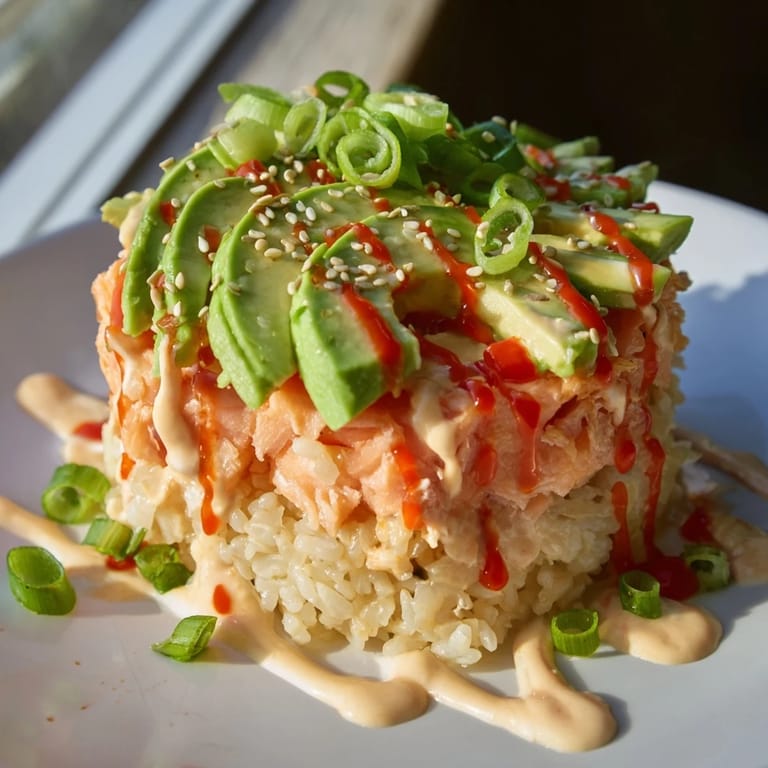
 There's something about a bowl that makes eating feel less like an obligation and more like self-care. I discovered this salmon rice bowl scrolling through videos at midnight, watching someone transform leftovers into something so vibrant it stopped me mid-scroll. The next morning, I had cold rice in the fridge and salmon from dinner the night before, so I figured why not. Two minutes in the microwave, a handful of toppings, and suddenly I was eating something that tasted like a sushi restaurant had moved into my kitchen.
I made this for my roommate on a random Tuesday when she came home exhausted from work, and watching her face light up was the moment I realized this wasn't just lunch—it was a reset button. She wrapped each bite in nori like she was performing a tiny ritual, and suddenly we were both sitting there in comfortable silence, just eating and being happy. That's when I knew I'd found something worth making again and again.
Ingredients
- Cooked salmon fillet (6 oz, skin removed and flaked): The star of the show—use good quality salmon or even canned in a pinch, though fresh flaked salmon has a tenderness that makes each bite feel special.
- Short-grain cooked rice (2 cups, preferably leftover and chilled): Day-old rice actually works better here because it holds its texture instead of turning mushy when warmed through.
- Soy sauce (2 tablespoons): This is your umami backbone, seasoning both the rice and salmon so everything tastes intentional and complete.
- Japanese mayonnaise, Kewpie preferred (1 tablespoon): It's creamier and less tangy than regular mayo, which means it doesn't overpower the delicate salmon.
- Sriracha sauce (1 tablespoon): The heat brings everything into focus—adjust this to your preference, or skip it entirely if you like things mild.
- Ripe avocado, sliced (1): Timing matters here; slice it just before assembling so it stays bright green instead of turning that disappointing gray.
- Green onion, thinly sliced (1, optional): A quiet flavor that adds freshness and a slight crunch without demanding attention.
- Toasted sesame seeds (1 teaspoon): Toast them yourself if you have time—they taste so much better than the pre-toasted versions and make the whole bowl smell amazing.
- Roasted seaweed sheets, nori snack sheets (6–8 small): These are the vehicle for your bites, turning the whole experience into something fun and interactive.
Tired of Takeout? 🥡
Get 10 meals you can make faster than delivery arrives. Seriously.
One email. No spam. Unsubscribe anytime.
Instructions
- Build your base:
- Scoop your chilled rice into a microwave-safe bowl and crown it with flaked salmon, then drizzle with a tablespoon of soy sauce. The salt will start seasoning everything from the inside out.
- Warm everything through:
- Cover loosely with parchment or a microwave cover and heat on high for 1–2 minutes—you want the rice warm and the salmon gently heated, not steaming and falling apart. A quick test: the rice should be hot enough to slightly soften the salmon flakes.
- Layer in the creamy and spicy:
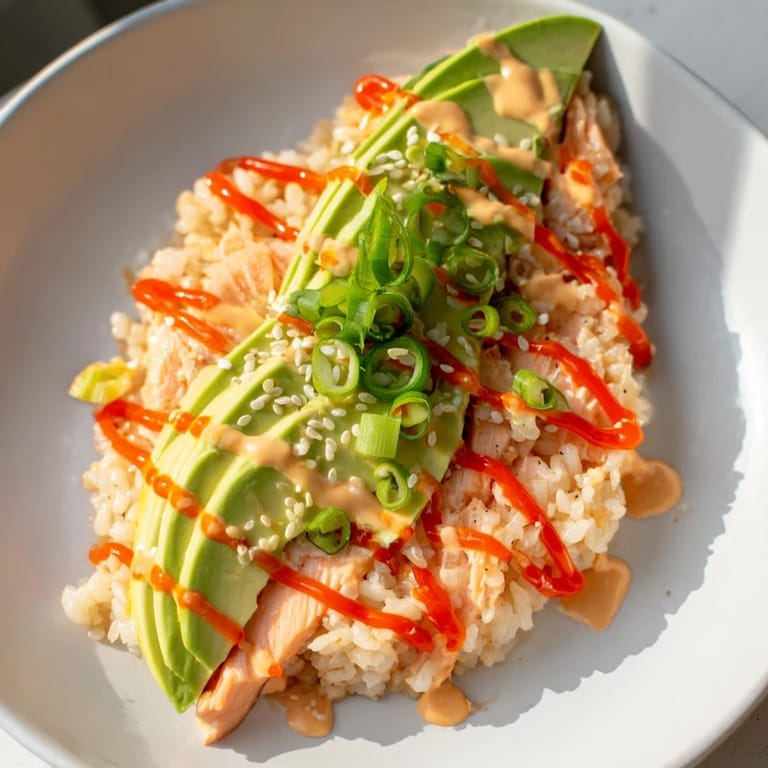
- Drizzle the warm mixture with mayo and sriracha, then taste and add the extra soy sauce if you want more salt. This is where you're building layers of flavor instead of just mixing everything into submission.
- Gently bring it together:
- Stir everything until the creamy mayo coats the rice and salmon, creating something that tastes cohesive but still has texture. You're looking for streaks of mayo and visible salmon flakes, not a uniform paste.
- Crown with freshness:
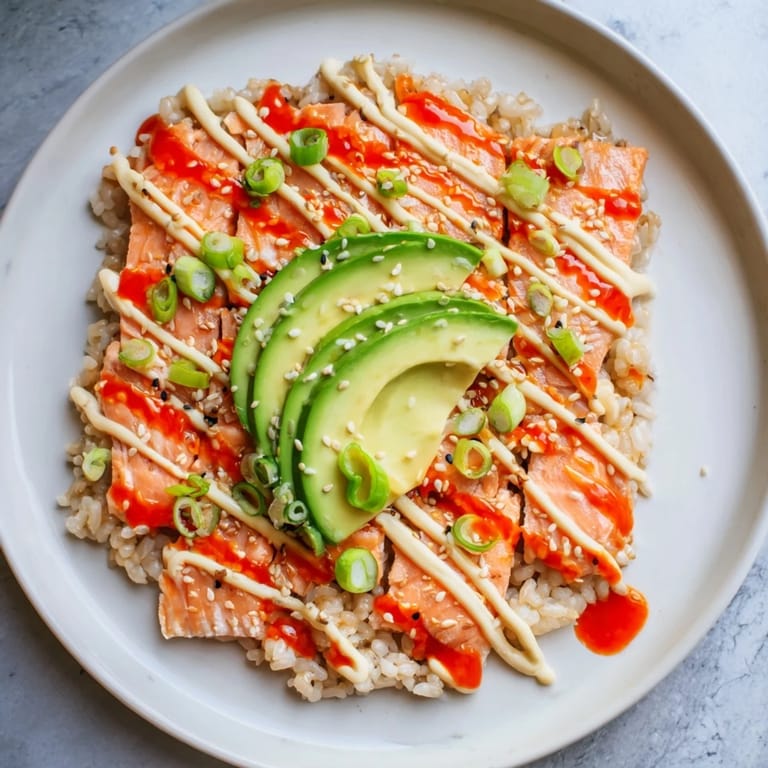
- Top with avocado slices, scattered green onion, and a sprinkle of sesame seeds. These cool, fresh toppings against the warm rice create a little moment of contrast that makes every bite interesting.
- Serve and enjoy like a ritual:
- Set the nori sheets alongside your bowl and invite yourself to scoop a bite onto each sheet, then eat it like a hand roll. The seaweed gets slightly warm and pillowy from the heat of the rice, but still has enough structure to hold everything together.
 Pin to board
 The magic of this bowl isn't in any single ingredient—it's in the moment when you wrap that first bite in nori and realize you've created something that tastes restaurant-quality in your own kitchen, in about the time it takes to make toast. It feels like a small victory, and somehow, the best meals always do.
Why This Bowl Changed My Weeknight Dinners
Before I knew about this combination, I was the person who ate salmon and rice separately, like they were assigned to different meals. But wrapping them together in seaweed made me realize that sometimes the best dishes are just about permission—permission to use what you have, permission to eat something that feels indulgent on a Tuesday, permission to spend two minutes instead of two hours. This bowl gave me that permission back.
Customization and Swaps That Actually Work
I've made this bowl with canned salmon on mornings I didn't have fresh fish, and honestly, it was still delicious because the mayo and sriracha are doing so much flavor work that nobody misses the nuance. I've also swapped the sriracha for chili crisp when I wanted something less sharp, and swapped in cooked tuna when salmon wasn't on sale. The beauty of a bowl is that it's flexible without losing its identity—you're not reinventing the wheel, just rotating the toppings.
The Ritual of Eating This Way
There's something grounding about eating with your hands, wrapping each bite in nori and controlling exactly how much salmon, rice, and topping you want in each piece. It turns eating from something passive into something participatory, and suddenly a simple weeknight dinner becomes a moment worth paying attention to. I've noticed I eat slower, taste more, and feel satisfied instead of just full—which might sound small, but it changes everything about how you experience food.
- Add a splash of rice vinegar or a pinch of furikake if you want an extra layer of umami and crunch.
- Toast your sesame seeds in a dry pan for about a minute if you have fresh ones—the aroma alone is worth the extra step.
- Keep the seaweed sheets in an airtight container after opening so they stay crispy instead of going limp.
 Pin to board
 This bowl is proof that the most satisfying meals don't require complicated techniques or obscure ingredients—just intention, a few good flavors, and permission to eat something that makes you happy. Make it once, and it'll become a weeknight staple you never knew you needed.
Recipe Questions & Answers
- → What type of salmon is best for this dish?
Cooked salmon fillet, either fresh or leftover, works well. Skinless and flaked for easy mixing.
- → Can I use a different type of rice?
Short-grain rice is preferred for its stickiness, but any cooked rice can be used if pressed together carefully.
- → How spicy is the mayonnaise sauce?
The blend of Japanese mayonnaise and sriracha adds a mild to moderate heat, which can be adjusted to taste.
- → What are good substitutes for seaweed sheets?
Roasted nori snack sheets are ideal, but you can also use lettuce leaves or omit them entirely.
- → Is this bowl suitable for pescatarians?
Yes, featuring fish and plant-based ingredients, it fits well within a pescatarian diet.